Latest Posts

Library Journal Book Review

LJ mast

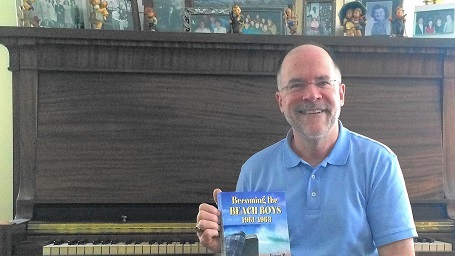
Murphy, James B. Becoming the Beach Boys, 1961-1963. McFarland. 2015. 422p. photos. notes.  bibliog. index. ISBN 9780786473656. pap. $39.95; ebk. ISBN 9781476618531. MUSIC

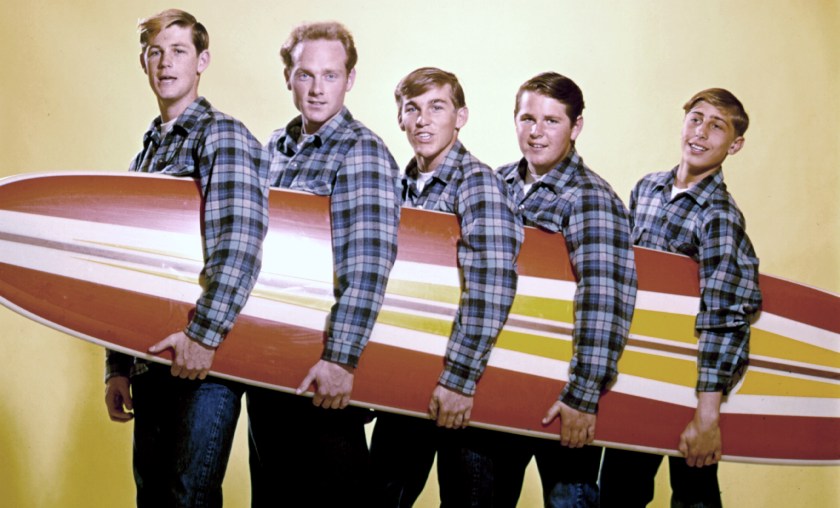
On the heels of the Brian Wilson biopic film Love and Mercy, this meticulously  researched and presented title gives readers a “boots-on-the-ground” look at how the  Beach Boys, one of the most influential groups in the history of popular music, got  its start and is the definitive book on the humble beginnings of the band. Describing  from their first moments as the Pendletones up till the end of their “surf” years in  1963, the book details how the band formed and offers original interviews and primary  source documents, creating a history that flows through the pages, making the title  an easy read for those interested in these little tidbits. It’s almost as if those  beautiful Beach Boys harmonies-intricately arranged, soaring, and pleasing to the  listener-are invoked in the book’s layout. VERDICT A must-read for Beach Boys fans  and popular music historians. These readers will love the depth of research, but  casual fans may get bogged down in the details. Recommended for libraries with strong  music collections.

Justin Hoenke, -Benson -Memorial Lib., Titusville, PA   

Love library

Russia Comes to LA and Hawthorne High

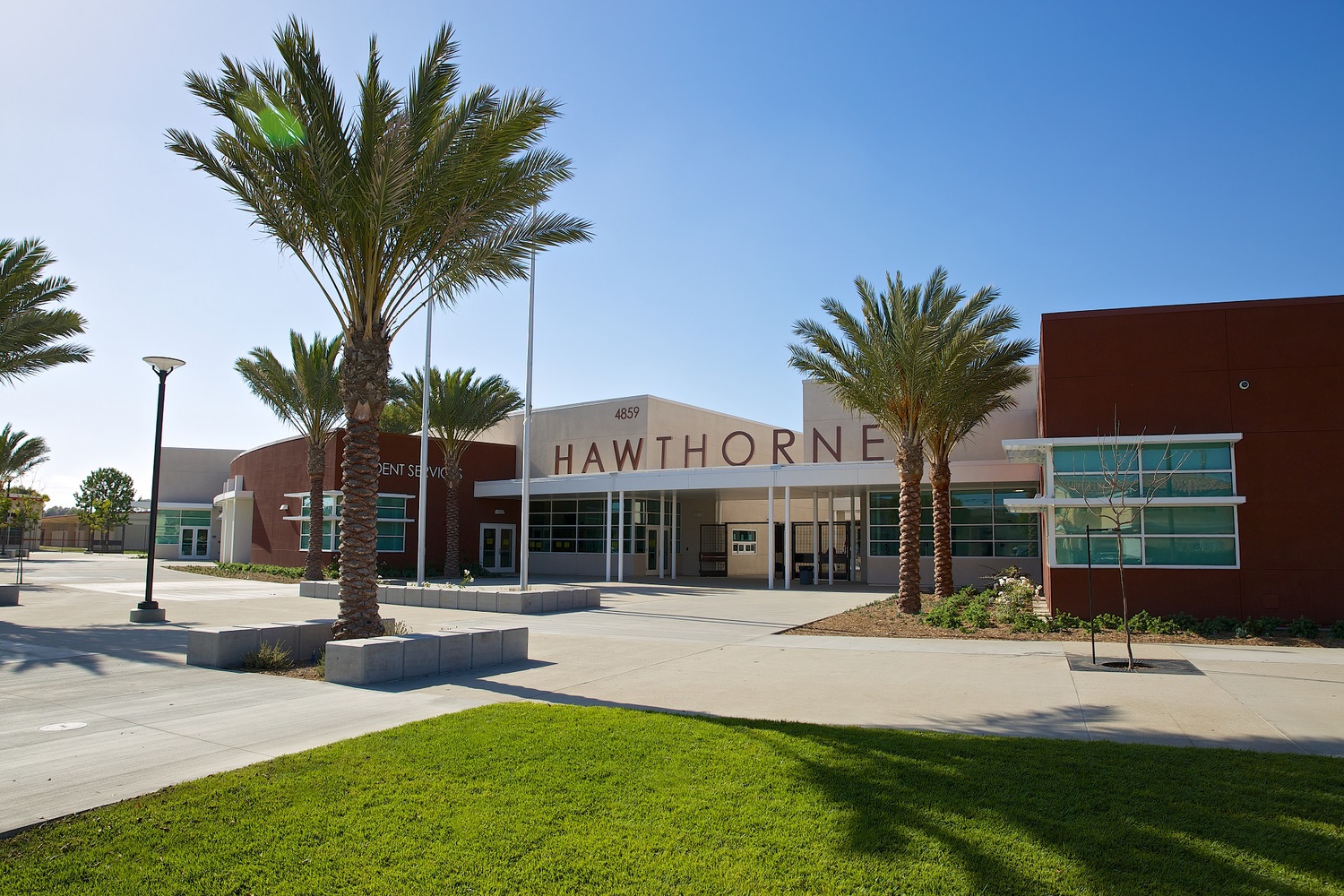
On September 8, 1959, 1,900 students trudged through the doors of Hawthorne High, including seventeen-year-old seniors Al Jardine and Brian Wilson, and Brian’s fourteen-year-old brother Dennis, one of 500 entering freshmen of the Class of ’63.  As much as they hated to return to school, there was some good news.  The school day would be thirty minutes shorter this year.  It still began sharply at 8:30 a.m. and each of the seven periods still lasted 53 minutes, but a half-hour was shaved from the two lunch periods.  The new schedule gave cafeteria workers more time to restock food and prepare for the second lunch period.  The not-so-good news was getting accustomed to the new bell system signaling when to change classes as students had seven minutes to scurry to their next class.  The lunch periods began at 11:23 a.m. and 12:23 p.m., and each lasted thirty-eight minutes.  If you didn’t pack your lunch, you spent a great deal of that precious time waiting in line.

Hawthorne HS

Senior Jean Robertson returned to Hawthorne High after spending her summer in Istanbul as part of the American Field Services Program described as “an international exchange program designed to promote the understanding of the social, political, and cultural differences among the nations of the world.”  The program arranged for American students to study abroad and students from foreign countries to attend school in the United States.  The AFS club at Hawthorne High had about two dozen members and sponsored two Backwards Dance (including the April Fools Dance), a pancake breakfast, and sold U.S. Savings Bonds during AFS week in early October to raise money to send a student overseas.  Robertson was one of ninety American students to fly from New York via Newfoundland, Ireland, and Greece, en route to Istanbul where their plane was met by hundreds of Turkish families greeting them at the airport.  Upon returning, Robertson told her classmates, “Women [in Turkey] have much more freedom [now] than they did, but most teenage girls are not allowed to date or in some cases speak to boys outside the family.  Turkey is a man’s world and the women obey their men to the letter without any back talk.  The Turks are warm and friendly and the boys are very handsome.”  In her new position as managing editor of the weekly Cougar, Robertson wrote a column periodically about her experience in Istanbul.

The 1959-1960 school year was the sixth time Hawthorne High hosted foreign exchange students.  Since 1955, Hawthorne had hosted teens from New Zealand, Denmark, Germany, France, Finland, Greece, Ireland, and Italy.  In exchange, five Hawthorne students (four girls and one boy) had traveled to Germany twice, Norway, Finland, and Turkey.  This year Hawthorne welcomed Ayse “Zafer” Cetinkaya, a petite brown-haired, blue-eyed girl from Istanbul, and Guillermo (“Willie”) Alonso Berrios, a handsome, soft-spoken, and polite boy from Santiago, Chile.  Hawthorne High welcomed Zafer like a scene out of Grease and, later in the year, voted her Honorary Princess.  Zafer commented on her first impressions of the United States.  “There are so many cars here.  In Istanbul we rode to school on the trolley or bus.  No one uses cars.  I had never seen a subway before I entered New York.  At home the climate is much the same in the summer, except the nights are warmer there.  In the winter it is very cold and it snows very much.  Our styles are much the same except they are more simple than here.  We wear just about the same as you here.”

Zafer lived with Mr. and Mrs. Ernest Wilson (no relation to Audree and Murry) in Hawthorne.  Their daughter Tyreen commented, “It has broadened my whole life and I have not only gained a new sister, but her whole Turkish family.”

Meanwhile, Willie was adjusting to only three meals a days instead of the customary four back home.  He lived with the Hayes family and their four daughters.  “Having a teenage brother added to a family of four girls has presented a lot of interesting problems and an excited life,” said Sandy Hayes.  “I’ve always wanted to have a brother and Willie is perfect.”

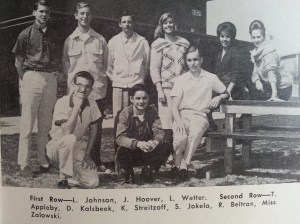
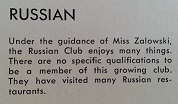
Helping to broaden the student’s international perspective, Hawthorn High began this year offering Russian as a foreign language and hired Kathryn Zalowski away from Fairfax High School to teach that course and one on social studies.

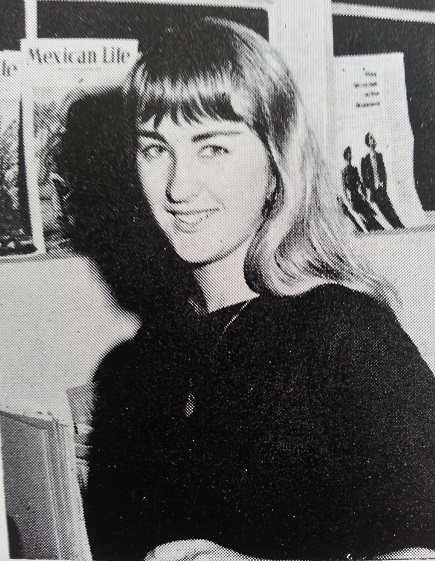
Russian Language teacher Kathryn Zalowski

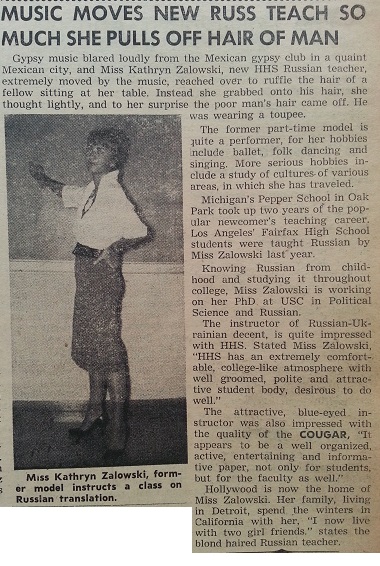
Russian Language teacher Kathryn Zalowski

Zalowski was one of twenty-six new teachers to join Hawthorne High that year and she quickly became one of its most popular.  The blonde, blue-eyed, former part-time model was young, single, and very attractive.  She was Ukranian and grew up speaking Russian and studying it in college.  A native of Detroit, she now lived with two girlfriends in Hollywood and was working on her PhD in political science and Russian at USC.  She enjoyed ballet, folk dancing, singing, and studying the cultures of countries in which she had traveled.

On July 26, 1959, the Los Angeles Times reported the local school board discussed the course curriculum and that Zalowski would stress conversational Russian.

In the Cougar, she remarked, “Hawthorne High has an extremely comfortable, college-like atmosphere with well-groomed, polite, and attractive student body, desirous to do well.”

Miss Zalowski teaching at Hawthorne High

Miss Zalowski teaching at Hawthorne High

For hormonally charged teenage boys, she spurred a whole new interest in all things Russian.  Students recall her getting into her convertible after school and driving off with her long hair streaming behind her.  More than fifty years later, she is still recalled fondly on the school’s alumni website.

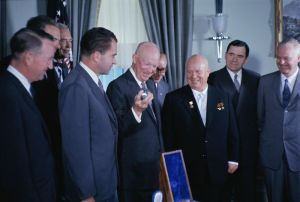
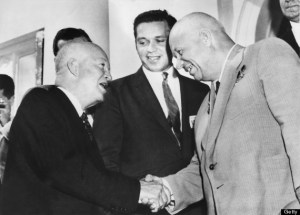
On Tuesday, September 15, barely two weeks into the semester, Zalowski had a unique opportunity to teach her Russian students a lesson in cold war diplomacy when Soviet Premier Nikita Khrushchev made a historic visit to the United States.  It was the first time a Soviet leader had set foot on American soil.

Khrushchev was sixty-five years old and had been in power about five years when President Eisenhower invited him to Camp David.  Eisenhower thought it would be for just a few days, but Khrushchev surprised him by asking if he could first travel around the United States for “ten to fifteen days” before meeting.

Ike reluctantly agreed and asked the State Department to arrange the trip.  Eisenhower wanted the Soviet leader to see America at its best.  He wanted Khrushchev to see Levittown because it was inhabited largely by the working class.  He wanted him to visit his hometown of Abilene, Kansas, to appreciate how hard he had worked growing up and to dispel Khrushchev’s notion that Americans knew nothing of hard work.  “I want him to see a happy people.  I want him to see free people, doing exactly as they choose, within the limits that they must not transgress the rights of others.”

Khrushchev, his wife, Nina Petrovna, and their adult children, visited the U.S. for thirteen days.  After arriving in Washington, D.C., and getting settled at Blair House, Khrushchev met briefly with President Eisenhower and Vice President Nixon.  Khrushcehv expressed indignation to Eisenhower over an interview printed in the morning papers in which he claimed Nixon used “impermissible expressions” about the Soviet Union and socialism.  Eisenhower handled the remark diplomatically and went on to offer the use of Air Force One, a Boeing 707 at the time, for Khrushchev’s visit of the country.  Khrushchev spent a few days in our nation’s capital and New York City, where he got stuck in an elevator on the 30th floor of the Waldorf Astoria and remarked “capitalist malfunction.”  Accompanied by United Nations Ambassador Henry Cabot Lodge, he then flew to LA on Saturday, September 18.

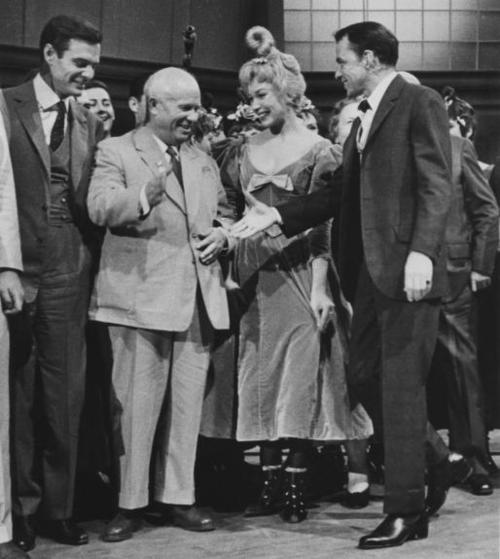
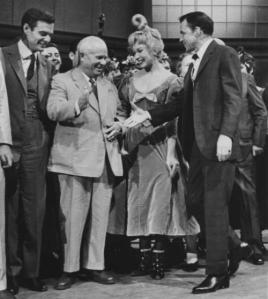
Frank Sinatra was his Hollywood host and they toured the sound stage at Twentieth Century Fox Studios and watched a scene from the movie Can Can being filmed.  Khrushchev met Maurice Chevalier and was charmed by the film’s two female stars Juliet Prowse and Shirley Maclaine.  In his memoir, Khrushchev recalled, “There are moments in this dance that cannot be considered quite decent, scenes that would not be taken well by everyone.”

Although a trip to Disneyland had been planned, the State Department urged Ambassador Lodge to dissuade Khrushchev because of security concerns.  Khrushev was disappointed and flashed a bit of his famous temper.  He angrily asked, “Then what must I do?  Commit suicide?  Is there an epidemic of cholera there?  Or have gangsters taken hold of the place that can destroy me?”  In his memoir, he wrote he believed anti-Soviet Union demonstrations were being planned at Disneyland and that the U.S. government wanted to shield him from any unpleasantness.

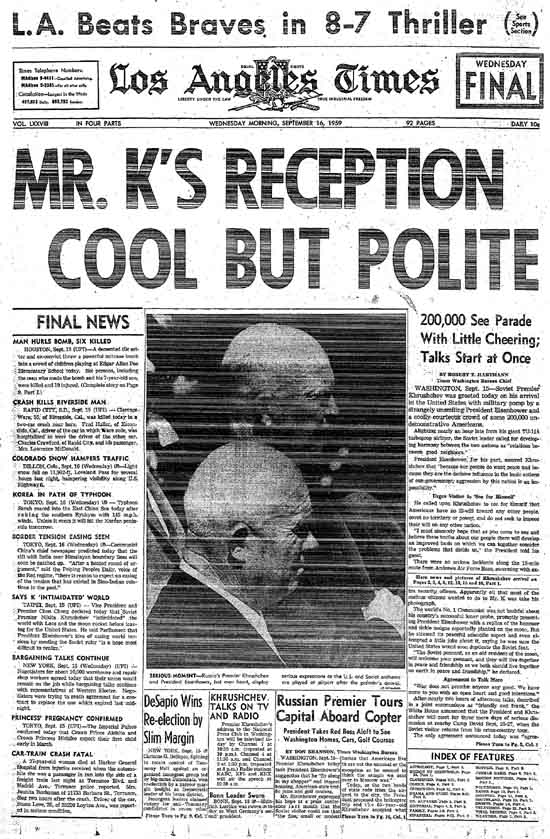
Spyros P. Skouras, president of Twentieth Century Fox, and Eric Johnston, president of the Motion Picture Association of America, hosted a luncheon in Khrushchev’s honor at the Café Paris in Hollywood.  In his welcoming speech, Skouras, an ardent anti-communist, referred to Khrushchev’s remark at a press conference years earlier that the Soviet Union would bury capitalism.  Khrushchev later maintained his incautious remark was misinterpreted and that what he said was “We will bury the enemies of the revolution.”  Skouras went on to say that Los Angeles wasn’t interested in burying anyone, but would rise to the challenge if the threat was posed.  Krushchev was indignant.  He responded, “If you want to go on with the arms race, very well.  We accept that challenge.  As for the output of rockets, well, they are on the assembly line.  This is a most serious question.  It is one of life or death, ladies and gentlemen.  One of war and peace.”

Kruschev LA Times article

That evening, LA Mayor Norris Poulson hosted an elegant dinner for Khrushchev at the Ambassador Hotel.  During Poulson’s remarks, Khrushchev was offended at what he perceived to be “uncomplimentary remarks, especially regarding the position taken by the USSR in world politics.”  Khrushchev decided not to let it pass and asked Poulson for the opportunity to respond.  He said, “Mr. Mayor, I am a guest of the president and I have come here at his invitation.  But I did not ask to be your guest, and I will not permit any disparagement, any humiliation, and especially any insulting statements against Soviet policies, against our country—the great Soviet Union—and against our people.  If my visit here as a representative of the USSR does not suit you, our plane is sitting at the airport in Washington.  I can always summon it to come right here and fly back to the Soviet Union from here.”  The audience was stunned.

Later, back in his hotel room, Khrushchev bellowed his displeasure in a loud voice.  His aides attempted to calm him down, but, as he later wrote in his memoirs, he was “simply expressing my indignation for the ears of our hosts.  I was convinced that listening devices had been installed and that Lodge, who had a room in the same hotel, was in his room listening to me.”  Khrushchev sent his foreign minister, Alexi Gromyko, to inform Lodge he would not travel to San Francisco in the morning.  Gromyko returned with Lodge who assured Khrushchev “nothing like this would be repeated.  On the contrary Mr. Khrushchev will be very pleased by the atmosphere in San Francisco.”

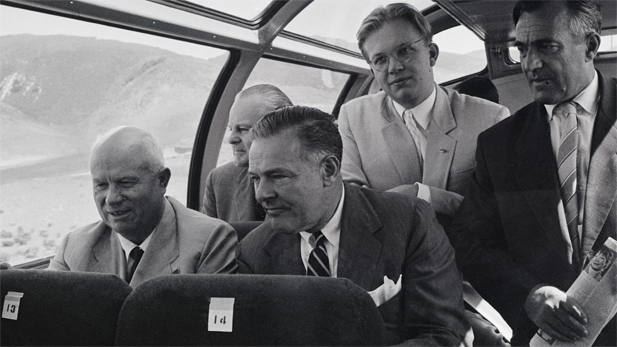
Khrushchev left LA the following day and traveled north by train to a whistle stop in San Luis Obispo.  On the train, Lodge apologized for Poulson’s remarks.  Lodge had read an early draft and had edited them heavily, but Poulson retained a few comments that offended the testy Soviet premier.  The decision to travel by train was a calculated one.  The State Department wanted Khrushchev to see Vandenberg Air Force Base where Atlas missiles aimed at his country were clearly visible from the train.  Officials reasoned that if Khrushchev saw our missiles, then President Eisenhower could ask to see Soviet missiles on a visit being planned for 1960.  Kruschev on trainKhrushchev shrewdly turned his head the other way as the train passed Vandenberg and refused to look at the missiles.  He would not be beholden to Ike to show him Soviet missiles.

At San Luis Obispo, Khrushchev surprised his handlers and got off the train to mingle briefly with the approximately 2,500 people who turned out to greet him.  When he was safely back on the train, Lodge returned to him a gold medal with a bas relief of Lenin that had come loose from his suit lapel and fallen onto the platform.  A spectator found it and wanted to return it to him.  Khrushchev had received the medal from The Society for Peaceful Coexistence.  He was touched by this simple act of kindness, commenting in his memoirs that “someone else might have just kept what they found as a souvenir or have been tempted to hold on to this treasure, because the medal was made of gold.”  It’s interesting how the kindness shown by someone on that railroad platform had a profound impact on Khrushchev’s impression of Americans.  As the train chugged out of the station, Khrushchev told Lodge, “I want you to notice one thing.  The plain people of America like me.  It’s just those bastards around Eisenhower that don’t.”

The train continued north to San Francisco where Khrushechev visited an American supermarket, addressed a group of longshoremen, and met with Walter Reuther, the head of the AFL-CIO and president of the United Auto Workers union.  As a young man, Reuther was sympathetic to the Soviet Union.  After being let go from the Ford Motor Company in 1933, he traveled to the Soviet Union and worked at an auto factory in Gorky where he became disillusioned with socialism.

Khruschev_hot_dog

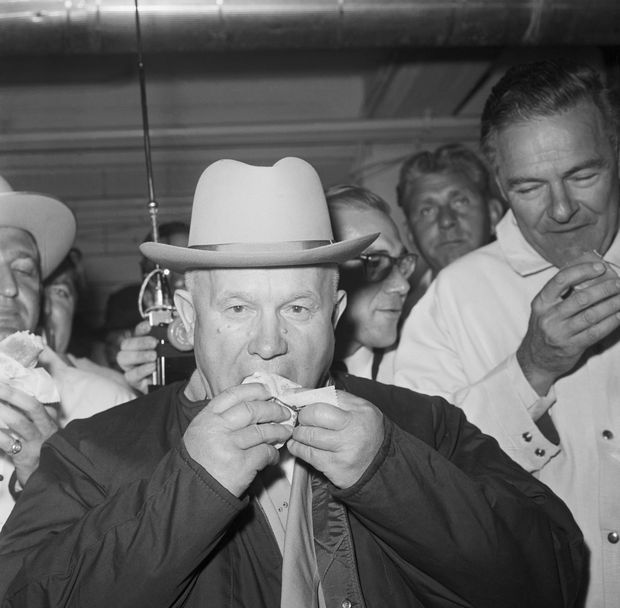
Soviet PreMier Nikita Khrushchev tastes his first American hot dog, complete with mustard, Sept 22, 1959. The Communist boss was asked what he thought of it. He replied “OK, excellent, wonderful,” but then added that it wasn’t enough. (Credit: Courtesy of © Bettmann/ CORBIS/PBS)

After San Francisco, Khrushchev traveled to Des Moines, Iowa, where he ate his first American hot dog during a tour of a meat packing plant.  Although the unionized plant workers were on strike and refused to meet with Khrushchev, the plant owner seized the opportunity to promote his business.  He had Khrushchev and Lodge eat hot dogs for the gaggle of American and Soviet journalists covering the trip.   Krushchev also toured Iowa State University in Ames, Iowa, and visited Roswell Garst’s large farming operation.  Khrushchev and Garst first met October 17, 1955, at the government dacha of Livadia, not far from Yalta in the Crimea.  Garst was one of the owners of Garst & Thomas, a subsidiary of the Pioneer Company which grew hybrid varieties of corn.  He visited the Soviet Union to observe Soviet agricultural practices.  Khrushchev reportedly was impressed with American agricultural education and farming techniques.

From Iowa, it was on to Pittsburgh where striking steel workers refused to meet with him so the delegation drove around and toured the city by car.  Khrushchev later commented the women were dressed in “shorts, blue jeans, and very lightweight dresses.  Our women wear more expensive dresses, with darker colors, that cover their bodies more.”  He then returned to Washington, D.C., for his meeting with President Eisenhower at Camp David in Maryland.  The two leaders discussed Berlin and when Vice President Richard Nixon escorted him to Andrews Air Force Base for his flight to Moscow, Khrushchev reportedly left feeling detente was possible with this American administration.

The night before Khrushchev landed in LA, most Hawthorne students had a decidedly less global event on their minds.  The traditional Kick-Off Dance was held in the boys’ gymnasium Friday, September 18, from 8:00 to 11:00 p.m.  The dress code was dressy cottons for girls, and slacks and sport coats for boys.  It was the first social event of the new school year and was designed to get the student body pumped up for the first football game of the season the following week.

While Miss Zalowski used Khrushchev’s historic visit as a teaching tool in the classroom, some students did not take the occasion too seriously.  The October 23 Cougar published their own “interview” with the Soviet leader.  “Mr. K, in your recent visit to Iowa, did you discover that American soil is much stronger than that of Russia?”  To which the Soviet premier replied, “Yes, you have surpassed us in Russia.  But we invented soil, you know.  Our soil is very weak in Russia.  It is so weak, that the farmers in Russia can’t even raise their voices.”

In an oddly comforting way, it is somewhat reassuring to know high school humor has not changed much in more than fifty years.

To hear a discussion of the Khrushchev visit to the U.S., listen to NPR’s All Things Considered as broadcast by WNYC 93.9 FM: Khrushchev visit (Panel: Leonard Lopoate, NPR; Robert Stone, Director of film Cold War Roadshow; William Taubman, Political Science Professor, Amherst College).

Sources:

Halberstam, Robert.  The Fifties.  New York: Villard Books, 1993.

Krushchev, Nikita Sergeevich. Sergei Krushchev, George Shriver, Stephen Shenfield.  Memoirs of Nikita Krushchev, Volume 3: Statesmen (1953-1964), The Pennsylvania University, University Park, PA, 2007.

Hawthorne’s Plaza Theater and The Tingler

Movies were a popular pastime for teenagers in the 1950s. And for parents, they were an unbeatable value. For less than a dollar, movies got the kids out of the house, occupied them for an entire afternoon, and, even after forking over a little spending money, were still cheaper than a babysitter. The kids would leave late morning and not be seen again until dinner time. They were treated to about five hours of entertainment—cartoons with Tom and Jerry, and Woody Woodpecker, boring newsreels, coming attractions, serials of Superman, Tarzan, Zorro, and Flash Gordon, and at least two feature-length movies. And since theaters weren’t emptied between showings, lots of kids stayed to see a movie again.

Another movie phenomenon of the time was hearing, from somewhere in the darkened theater, “Oh, this is where we came in.” No one paid attention to timetables or when movies started. You just went, began watching at whatever scene on which you entered, and stayed until that scene came around again. People stood up, excused themselves down a row of seats, trudged up the aisle, and exited the theater.

Drive-In MosesWith Hollywood just a short distance away, the South Bay had no shortage of movie theaters—Paradise, Ritz, La Tijera, United Artists, 5th Avenue, Lennox, Strand, El Rey, Academy, Loyola, Fox. For the car set, a popular date destination or to see and be seen were the Centinela Drive-In, the Clock Drive-In, and those in Long Beach and Torrance. Although Hawthorne had the Plaza Theater (a second theater, the Rex, located at 122nd Street and Acacia, closed in the early 1950s), many of the kids in Brian’s neighborhood walked to the Imperial Theater, 3180 West Imperial Highway, in nearby Inglewood for their Saturday matinee movie fix.

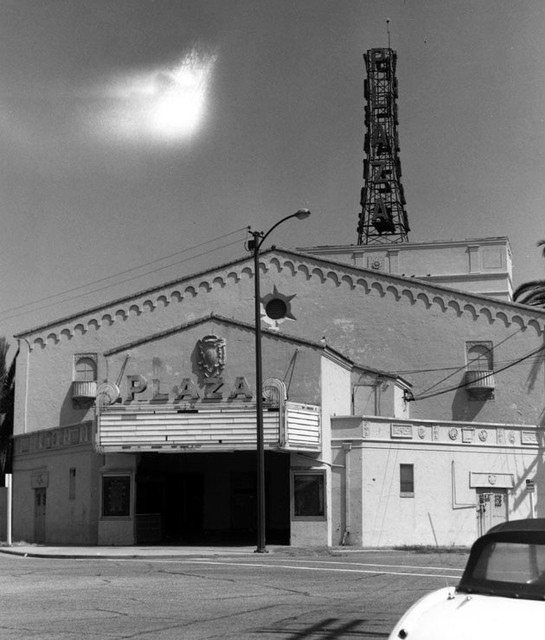
Plaza Theater, Hawthorne, CA

Plaza Theater, Hawthorne, CA

For many Hawthorne residents, the Plaza Theater was their “Cinema Paradiso,” a touchstone of magical childhood memories. The Plaza opened November 28, 1927, as a live stage theater (a “legitimate theater” as they were called at the time), complete with an orchestra pit and elegant box seats overlooking the stage. It was located at 12788 Hawthorne Boulevard, near 126th Street and Acacia in Hawthorne. It was built in a Mission Revival style with an RKO radio-like open steel tower with the word “Plaza” in red neon vertical letters, and could accommodate 891 people. Sherrill Corwin and Lester Blumberg took over active operations of the Plaza in June 1949, acquiring controlling interest from E.S. “Ned” Calvi. A bit run-down by 1959, the Plaza was known locally by the decidedly less elegant names El Cheapo or Rat Palace, so named for the wildlife occasionally seen, or worse, merely felt, scurrying between the aisles. An afternoon at the Plaza Theater often ended with trip to nearby Taco Tios at 127th Street and Hawthorne Boulevard.

On a Saturday afternoon, the Plaza was packed with teenagers and not all the entertainment was up on the screen. Fueled by theater junk food and sugared drinks, boys discovered cardboard popcorn boxes, when emptied and flattened, were extremely aerodynamic and made excellent frisbees. One such missile tore the screen. On February 22, 1959, a Hawthorne High freshman tossed a knife through the screen. He later told police he “just wanted to see if he could do it.” Favorite girls were easy targets for all sorts of air-borne candy. And if the movie projector broke or a reel change wasn’t made smoothly, all hell broke loose. Kids would be jumping up and down on the worn seats, pulling cotton padding out of the seats, and generally wreaking havoc. And, as the matron/usher scoured the rows with her flashlight, ferreting out violations, you could try slipping behind the velvet curtain, opening an exit door, and letting your buddies in for free. But it almost never worked. The sunlight penetrated the curtain and the door creaked miserably. The usher would corral the offending delinquents and evict them unceremoniously from the theater.

Rebecca Donohoe Kabwasa, then a junior at Hawthorne High, worked in the Plaza box office and as an usher. It was her very first job. “The box office was easy,” she recalled, “but our ushering responsibilities included policing the back rows where the randy teenagers were getting to know each other. We would shine a flashlight in their faces until they unclinched. We had to wear the worst red and brown gabardine uniforms that were also worn by all the other employees, probably for years without having been dry cleaned. They were shiny with grime and buttered popcorn grease. I’ll never forget the smell and sickening feeling I experienced putting those things on! Oh, by the way, that job brought me another first. I was fired for eating a candy bar in the box office. It was presumably a bad reflection on such a high class theater.”

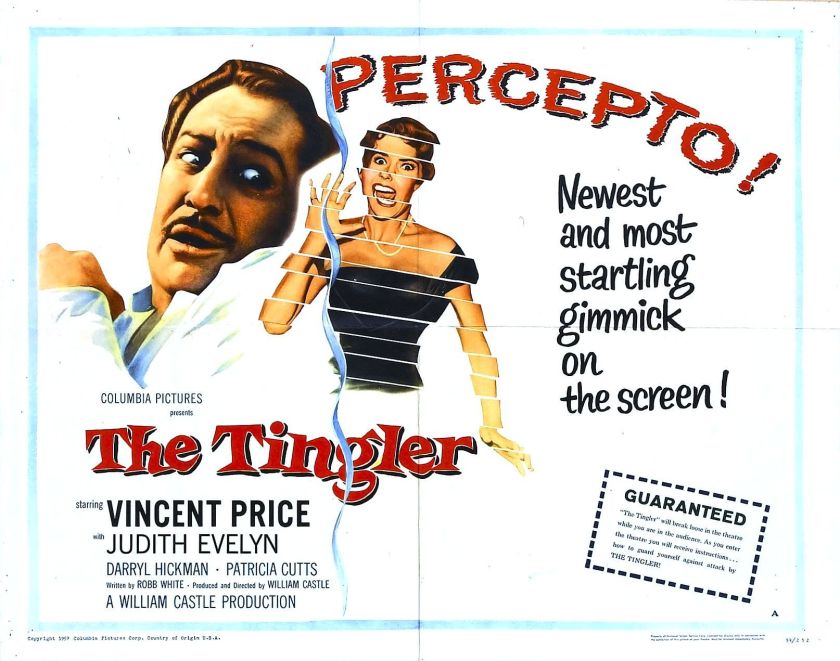
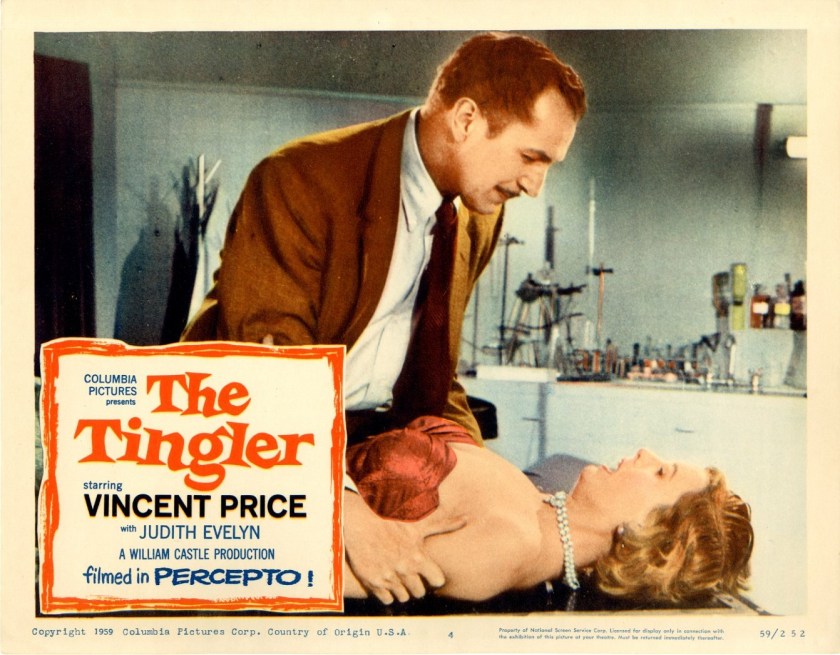
Teenagers have always sought vicarious frights provided by scary movies and, in the late 1950s, the master of scary movies was William Castle. His new film, The Tingler, released just in time for Halloween, opened October 28, 1959, in twenty-one local theaters. Brian and Al were about two months into their senior year at Hawthorne High School.

tingler-vincent-price-judith-evelyn

The Tingler starred Vincent Price and was written by Rob White and directed by Castle. This same trio scared the pants off audiences with The House on Haunted Hill when it opened in February 1959. They raked in so much money, Columbia Pictures gladly financed the production of The Tingler in which Price played Dr. Warren Chapin, a pathologist, who discovers the tingling sensation people feel in their spine in extreme fright is caused by a parasitic worm he names the “tingle.”  The parasite can only be killed by screaming. When an acquaintance uses Chapin’s discovery to kill his mute wife, Chapin performs an autopsy to remove the slug-like parasite. It escapes, of course, and eventually gets loose in a movie theater.  (Tingler trailer)

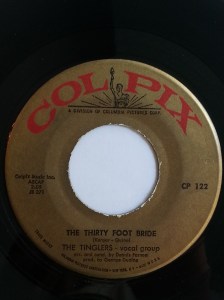
Columbia Pictures attempted to generate some advance buzz for the movie by releasing “The Tingler” (b/w “Thirty Foot Bride,” Colpix 122) by The Tinglers in mid-August, but the record failed to chart. Castle was a master at marketing and promotional gimmicks. In 1958’s Macabre, he offered a $1,000 “death by fright” insurance policy. In The House on Haunted Hill he rigged a pulley system in some of the larger theaters so a skeleton would fly over the audience’s heads at a frighteningly fragile time.

For The Tingler, Castle introduced Percepto, a system by which some of the seats in larger theaters were rigged with surplus World War II electric buzzers. The gimmick added $250,000 to the film’s budget. At the movie’s climax, the film appeared to break on screen and the silhouette of the tingler crept across the screen. The screen suddenly went black and theater goers were left in total darkness. Then the creepy voice of Vincent Price warned “The tingler is loose in THIS theater!” Well, that cued the projectionist to activate the buzzers. And, if you were an exceptionally lucky guy, there was a buzzer beneath your date’s seat. One of the movie’s slogans was

“Fellows, bring your date and watch her tingle.” The movie also promised “When the screen screams, you’ll scream too, if you value your life.”

And it wasn’t just the girls screaming. Russ Jacobsen recalled watching The Tingler with his future wife, Judy. “We were watching the movie in a drive-in and I had my arm around Judy. In a real scary part, I felt something crawling on my arm. It was something like a centipede which looked a lot like the thing in the movie. I yelled like hell and threw my arm back. The night was never the same. I couldn’t even eat my popcorn or drink my Coke after that.”

Another Hawthorne alum recalled, “So when it got loose in the theater, we were told by Vincent Price to stay calm or the tingler would find and grow in you. How’s that for impossible tasks? A theater full of scared kids screaming with their legs up in their air and told to stay calm.”

Hawthorne Cougartown newsletter review of The Tingler

Hawthorne H.S. Cougar review of The Tingler, Oct. 23, 1959

The tingler posterIronically, while the film appealed wildly to teenagers for its harmless frights, it was also the first to feature on-screen use of LSD, which was legal at the time. Screenwriter Robb White had experimented with LSD while a student at UCLA and decided to work it into the script. In the film, Vincent Price reads a book entitled Fright Effects Induced by Injection of Lysergic Acid LSD25. The Tingler also starred Darryl Hickman who agreed to play the on-screen fiancé of his real life fiancée Pamela Lincoln after Castle convinced him it would help further her career. Although the marriage ended in divorce, Hickman enjoyed a long career in film, television, and theater.
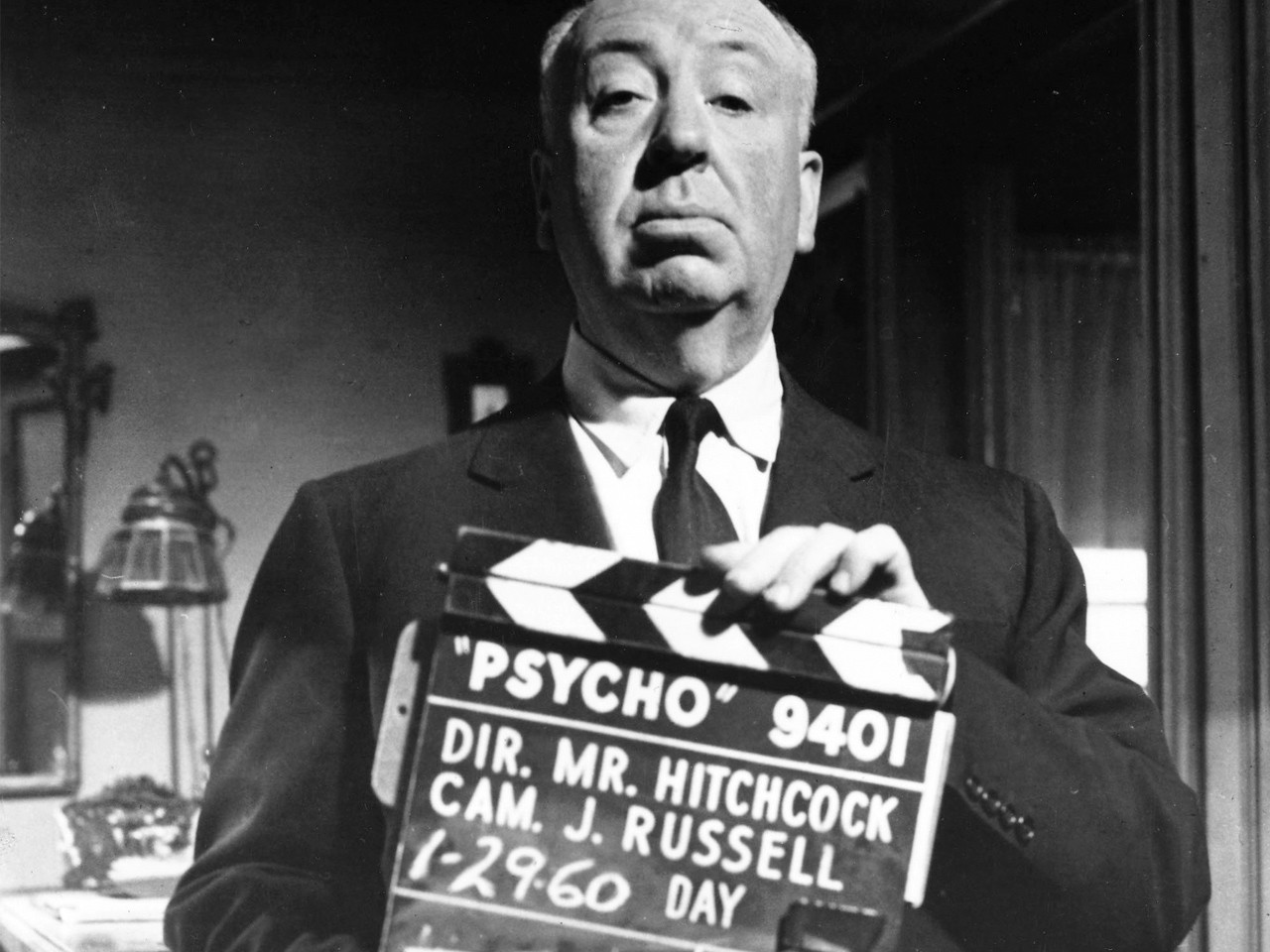
The low-budget Tingler made a nice profit for the creative team and Columbia Pictures, and caught the attention of film maker Alfred Hitchcock over at Paramount. Hitchcock’s North By Northwest, starring Cary Grant, captivated audiences the summer of 1959 and was the third top-grossing film of the year (Ben Hur and Sleeping Beauty were first and second; Some Like It Hot was fourth). On November 11, exactly two weeks after The Tingler opened, Hitchcock began filming a motion picture that would redefine the horror genre. hitchcock psychoPeggy Robertson, his production assistant, had come across a novel by Robert Bloch based loosely on the Wisconsin serial murderer Ed Gein. Robertson told Hitchcock she thought the novel would make a good film. He read the book, agreed, and reportedly directed Robertson to buy up every copy of the book she could find so the twist ending could be preserved for the film. For his screen adaptation, Hitchcock kept the terrifying, one-word title Block gave his novel. Psycho.

Capitol Tower Transforms LA Landscape

On Friday, April 6, 1956, fourteen years after its founding in 1942, Capitol Records celebrated the grand opening of its new, state-of-the-art, centralized headquarters at Hollywood Boulevard and Vine Street.  As searchlights crisscrossed the LA sky, Capitol and E.M.I. executives gathered to show off their new corporate headquarters.  The Capitol Tower, now a worldwide symbol of Hollywood and the music industry, was built by the architectural firm Welton Becket & Associates, and designed by Lou Naidorf.

Glenn Wallichs w the tower

Glenn E. Wallichs with model

As Angelenos watched the construction progress while driving along the Hollywood Freeway, they joked construction was delayed because workers didn’t know whether to “put it on at 33⅓ or 45.”  Others joked “you can’t corner girls in a round building.”  Although the unique circular structure resembles a stack of records loaded onto the spindle of a turntable, that was a happy accident.  During a construction tour, Capitol co-founder and president Glenn E. Wallichs told reporters, “We don’t want people to think it’s supposed to look like a stack of records.  The round design was the idea of the architect, Wilton Becket.  At first, I rejected it.  It sounded too much like a cheap stunt.  The sketches reminded me of the World’s Fair building in New York in 1939, but he convinced me it would be the best possible design for our purpose.  And it has turned out beautifully.  Making the building round has not been more expensive.  In fact, we may have saved some money on the final cost.”  He added, prophetically, “Our round building will last to become a landmark, like the Empire State Building is to New York and the Eifel Tower is to Paris.”

Welton Becket was born August 8, 1902, in Seattle and studied at the University of Washington.  He became one of Los Angeles’ most influential architects.  In 1933, Becket came to LA and, eventually, formed Welton Becket & Associates.  Welton_BecketHe designed the UCLA Medical Center, the Prudential Building in LA, the Santa Monica Civic Auditorium, the factory and offices of the Hallmark Company in Kansas City, Missouri, and Hilton Hotels in Beverly Hills, Cairo, Egypt, and Havana, Cuba.

At a cost of $2 million, the 93,000 square foot Tower is a concrete and glass cylinder supported by two central columns.  It has thirteen floors and rises 150 feet from the ground to the upper roof, the maximum height then permitted by LA County code.  The circular construction began on the second floor which is seventy eight feet in diameter.  The third and successive floors are ninety feet in diameter giving the illusion the tower is suspended in space.  Employees could eat lunch on the roof top terrace while enjoying the spectacular view of the city.  Jutting from the roof is a ninety two foot spire whose tip was a red beacon light that flashed the word “Hollywood” in Morse code every night (see video).  Leila Morse, the inventor’s granddaughter lived nearby and was invited to pull the switch activating the beacon.  The core of the building contains the elevators, washrooms, closets, and corridors.

Tower under construction

Tower under construction

The design had some inherent energy saving qualities, operational ergonomics, and was one of the first large fan coil projects in the area.  The reduced ratio of exterior wall surface to inner functional space lowered construction and air conditioning costs.  For Capitol executives, one tangible advantage was that everyone would have a window office.

The April 6 celebration was by invitation only.  Attendees gathered in the marble foyer and were greeted by a cheery Capitol employee who escorted them in small groups into one of two Otis elevators (a third elevator was not operational yet) to the Executive Floor which, since Becket was apparently not superstitious, was actually the 13th floor.  Getting off the elevator, you stepped onto carpet, turned right, and toured the offices where a young Voyle Gilmore worked as one of five A&R men.  And, conveniently, the A&R men were all men.  Each office had piped in music.  “Our own, of course,” joked Wallichs.  Then you strolled through the Artist’s Lounge where Frank Sinatra might occasionally wait, but only momentarily, to see Wallichs.  The wood paneling in the executive area was actually Flexwood, a wood veneer on a fabric backing fastened to the wall like wallpaper.  However, the cabinets in the executive offices were real wood and, concealed behind sliding doors in the lower half, contained a state-of-the-art turntable and amplifier.  The speaker was in the upper right corner of the cabinet.

You then proceeded to National Sales and Operations, the Legal Department, and the Library on the 12th floor.  Next up was Merchandising on eleven, Accounting on ten, and Tabulating on nine.  The ninth floor was also home to the Photographic Studio and dark room.  Capitol took pride in pointing out that the dazzling white floor tiles in the photo studio were made of vinyl-asbestos.  Floors eight through four were unoccupied at the time and slated for future tenants.  The highlight of the third floor was the Review Room, complete with sound insulated walls, where records were tested under “simulated living room conditions.”  The second floor was home to Purchasing, Advertising, and Personnel.

Capitol saved the best for last.  The tour took the back stairs to the first floor where guests toured the Recording Room (Lacquer Cutting), Recording Equipment Storage, Tape Master Storage, Tape Editing Rooms, and Shipping and Receiving.  From there, you were led through Studio C, the Mezzanine Lounge, and Studio B for a High Fidelity demonstration.  The tour wrapped up in Studio A where, after enjoying a light refreshment, you were given a souvenir record and booklet, and exited through the back door.

“The Capitol Record, a souvenir of the Capitol Tower” came in a cardboard sleeve with a cut-out photograph of the new building on the cover.  On the back cover were two black and white photographs showing Wallichs and Alan Livingston, Capitol’s executive vice president, “in one of the ultra-modern recording studios” and Frank Sinatra conducting a fifty-six piece orchestra in the Tower’s first recording session.

The 45 rpm record was narrated by George Fenneman and presented an aural chronological history of the label with snippets of its biggest selling recordings.  The record label was a dark gold that made the black lettering difficult to read.  The matrix numbers in the run-out grooves were 45-PRO-254-D1 and 45-PRO-255-D1 for sides one and two, respectively.  Along the bottom of the label in small print was “Not For Sale Restricted To Promotional Use Only.”

Capitol Hill Veterinarian Pens Book on Beach Boys

Review by Sean Meehan — August 14, 2015 at 5:15 pm

Hill now logo

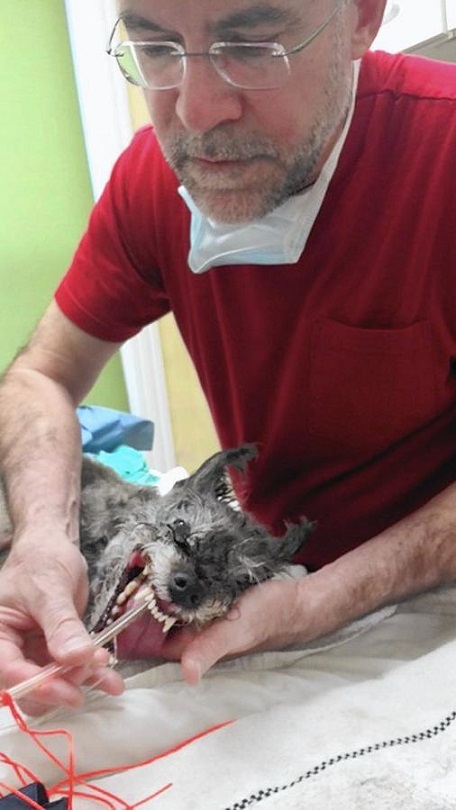
A Capitol Hill veterinarian is now the published author of a book about the formation and early years of the Beach Boys.

James Murphy, an associate veterinarian at Capitol Hill Animal Clinic at 1240 Pennsylvania Ave. SE, said he wrote his first book, “Becoming the Beach Boys,” to give a deeper look at the rock band’s origins.

“Origin stories have always kind of fascinated me,” he said. “I wasn’t interested in the career-spanning books, those things have been done. I wanted to zero in on what had been lacking. Nobody had written a cohesive, common-sense account of how they started out.”

The book grew out of a lifelong passion for the Beach Boys that started when he first heard the band’s hit, “Good Vibrations,” as a 10-year-old boy in 1966. For the past 50 years, Murphy’s interest in the Beach Boys never waned, leading him to start collecting their records and memorabilia and reading everything that he could find about them.

“I read every book about the Beach Boys, every magazine article on both sides of the Atlantic,” he said. “We’re talking hundreds of articles. I saw every film, every documentary.”

The more he read, the more Murphy said he felt there was a missing piece to the Beach Boys story. Initially, he said he thought about writing a short article about the origins of the band and submitting it to a magazine. But as he did more research, he realized that he had way more to say than could fit in an article.

By 2007, Murphy realized he might have enough material for a book, and began delving even deeper into Beach Boys history, conducting over 70 original interviews with acquaintances and classmates of the original band members, as well as tracking down ticket stubs, advertisements and other evidence of some of their earliest shows.

All the while, Murphy was still treating pets at the Capitol Hill Animal Clinic, researching and writing on his off hours.

“I would write at nights, on weekends and days off,” he said. “I’d stay up until two or three in the morning writing sometimes.”

After sending his manuscript to several publishers, his book eventually was accepted by publisher McFarland & Co., which released the book in June. Murphy set up a companion website for people to share their memories of the Beach Boys and to house the material that was cut from his original manuscript in the publishing process.

The paperback book, which is available for $35.96 on Amazon.com, takes a narrative approach to the band’s early years, using newspaper articles and interviews to piece together descriptions of the band’s first shows and recordings. The book also features rare early photographs, ticket stubs and ads from those early days, many of which came from Murphy’s own private memorabilia collection.

Murphy, however, was unable to interview the four living members of the Beach Boys. But he hopes that the band members will see his book and that he might be able to get in touch with them in the future.

“I’m kind of hopeful that maybe the Beach Boys themselves will read the book, and I have some indication that some of them might,” he said. “That would be cool if that happened, and I could talk to them and maybe fine-tune the story.”

Link to article:  https://www.hillnow.com/2015/08/14/capitol-hill-veterinarian-pens-book-on-beach-boys/


A Word About Podcasts

The website is my way of sharing research that didn’t make its way into the book and the experience of writing Becoming the Beach Boys, 1961-1963.  Additional posts are in the works and will appear soon.  Some of the site’s posts expand on stories that appear in BBB61-63; others are Beach Boys-related but outside the purview of the book.

It occurred to me some additional stories are better served by the telling rather than the reading.  Accordingly, I’ve added a Podcast menu page that initially will contain radio interviews I’ve participated in, but that will later include discussions of Beach Boys-related events and people back in the day.  First up on the Podcast page is a radio interview with WFDU that aired August 23, 2015:  Third Annual Beach Boys Bash on “The Vintage Rock & Pop Shop,” conducted by Ghosty.  There are also links to Ghosty’s interviews with David Marks, David Beard, and Barbara Eden.

Does anyone want to hear what it was like for me to pull the book together (the research, interviewing the folks behind the Boys, some of whom have since passed away) and what being a Beach Boys fan and collector means to me?

Feel free to comment and let me know what you’re interested in — let’s have fun (fun, fun) with this!

Find podcasts on the Podcast page: https://bbbjmurphy.wordpress.com/podcasts/

~ Jim

Go back

Your message has been sent

Warning
Warning
Warning
Warning

Warning.

AXS Entertainment Book Review

Review by James L. Neibaur
August 23, 2015

axs logo
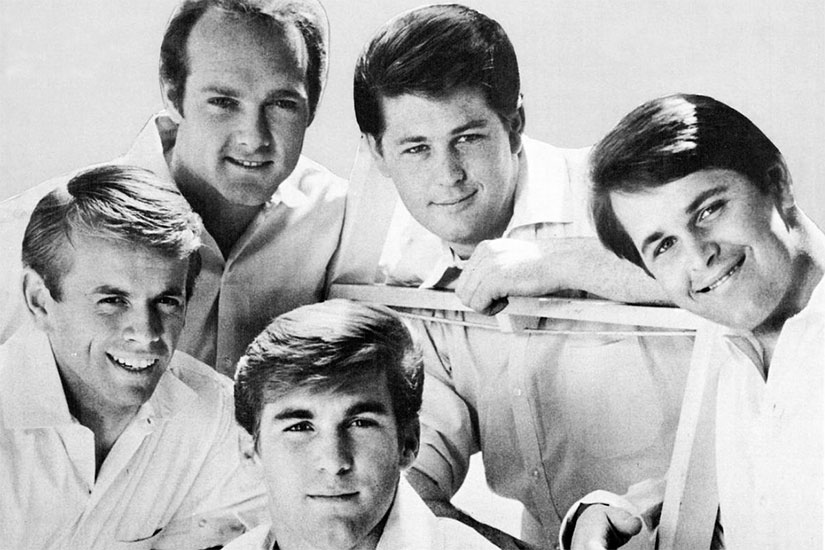
There are many groups who have achieved classic status in the history of rock and roll, but only a few are truly iconic. The Beach Boys are one of those few. In James B. Murphy’s new book, the group’s early trajectory is traced and examined, pointing out how their ideas, essentially the ideas of Brian Wilson, evolved into what eventually defined them as a unit. There are several books that try to understand the creative process of The Beach Boys once they achieved hit status with their first record. But Murphy’s book offers the most in-depth look at what transpired beforehand. Three brothers, a cousin, and a friend, with passion and spirit, but no musical training, managed to learn to play rented instruments, learn to sing, cut a record for an indie label, watch it climb the charts, and then sign with a major company. Their initial songs helped create the fun loving sunshine, surfing, and fast car mythology of California life in the post-Elvis, pre-Beatles 1960s. Murphy offers fascinating details about the creation of each song. Early ones like “409” were written by Brian Wilson and a songwriting friend named Gary Usher (Mike Love later sued to get credit for the line “she’s real fine my 409”). There are also new revelations about Brian’s tumultuous relationship with his father, his creative process during this early period, and how he felt about certain songs. Of course The Beach Boys would score after 1963 with such classics as “I Get Around,” “Don’t Worry Baby,” the amazing “Good Vibrations,” and the quintessential album “Pet Sounds.” But the period that Murphy examines offers the most detailed look at their history and creative development than can be found elsewhere. For libraries, research centers, musicians, songwriters, and casual fans of the group, “Becoming the Beach Boys” is an absolute must.Link to article: http://www.examiner.com/review/book-review-becoming-the-beach-boys-1961-1963If you’re interested in purchasing the book, visit AmazonBarnes and Noble, and McFarland Books.

James L. Neibaur author bio:  http://www.examiner.com/film-in-milwaukee/james-l-neibaur

Neibaur photo

Dorinda & Hite Morgan Discography

Dorinda Morgan was a prolific songwriter. While this discography is a good beginning, it is likely not comprehensive. For example, it seems certain she composed more songs during the 1930s.

The discography is drawn from documents with Broadcast Music, Incorporated (BMI), the American Society of Composers, Authors, and Publishers (ASCAP), the Copyright Office at the Library of Congress in Washington, D.C., interviews with Bruce Morgan, and my personal collection. Images, where available, accompany the records below and will be added as available. Check back.

[Last updated October 1, 2016 – details at bottom]

Please contact me with any additions, corrections, or images.

September 9, 1931 “Cabaret Lady”
written by Dorinda Morgan
copyrighted by H. Bowman Morgan
September 30, 1941 “V Is for Victory”
written by Dorinda Morgan
copyrighted by Hite Bowman Morgan (Brookhaven, Georgia)
December 31, 1941 “Anthem of the Allies”
music by Dorinda Morgan
words by Hite Bowman Morgan
copyrighted by Hite Bowman Morgan (Brookhaven, Georgia)
July 1945 “All Clear in My Heart”
written by Hite Bowman, Robert T. Chestnutt, and Dorinda Morgan
published with Guild Music
July 1, 1945 “Round and Round the Merry Go Round”
written by Dorinda Morgan
published with Guild Music
July 1, 1945 “Soviet Stars”
written by Hite Bowman (Morgan) and Dorinda Morgan
published with Guild Music
July 1, 1945 “Syncopated Symphony”
written by Dorinda Morgan
published with Guild Music
July 1, 1945 “Time Heals Everything”
written by Spade Cooley and Dorinda Morgan
published with Guild Music
July 1, 1945 “Turn Your Head, Sweetheart (I Can Still See Your Face)”
written by Hite Bowman (Morgan) and Dorinda Morgan
published with Guild Music
July 1, 1945 “Pappy’s Little Old Black Joe”
written by Hite Bowman (Morgan) and Dorinda Morgan
published with Guild Music
1945 “Pappy’s Little Old Black Joe”
The Vagabonds
A side written by Hite Bowman and Dorinda Morgan
A side published with Guild Music
A one-sided demo cut directly into aluminum exists
July 27, 1946 “Get Away from the Fish Wagon, Gertrude (The Man Ain’t Honking At You)” b/w “Without You for an Inspiration Dear”
Freddie Schicknelfitz Fisher, the Original Colonel of the Corn, and His Band
Maestro Records 706 (78 rpm)
Enterprise Records 267 (78 rpm)
B side sung by Doye O’Dell
Hite and Dorinda had some involvement with this record
late 1940s? “I Wonder If Pappy Had a System”
b/w “Without You for an Inspiration Dear”
Artist ?
Maestro Records
1948 ? “Ain’t That Fine” b/w “Don’t Put All Your Dreams in One Basket”
The Maxim Trio
Vocal by Ray Charles
Down Beat 216
A side written by Betty Hall Jones
published with Guild Music
July 17, 1948 “One Has My Name (The Other Has My Heart)” b/w “Wake Me in the Morning by the Swannee [sic] River”
The Frontiersmen, vocal by Eddie Dean
Crystal Records 132
A side also recorded by Jimmy Wakely and Jerry Lee Lewis
Hite and Dorinda had some involvement in this record
October 1948 “Toyland Polka”
b/w “Turn Your Head, Sweetheart (I Can Still See Your Face)”
A side by the Frontiersmen
B side by the Three Shif’les’ Skonks of the Frontiersmen
Crystal Records 182
A side written by Fitzsimmons-Henry Schelb
B side written by Morgan-Schelb-Bowman
published with Guild Music
Billboard entry on November 13, 1948
Henry Schelb owned Crystal Records and a local pressing plant.  He and his wife, Virgia, and their daughter, Virgine, were friends of the Morgans.
April 25, 1949 “A Flag Is Born”
written by Dorinda Morgan and Hite Bowman (Morgan)
copyrighted to Guild Music
May 1949 “Half Past Nine”
written by Dorinda Morgan and Al Winters
published with Guild Music
September 29, 1949 “Jelly Beans Daddy”
written by Jimmy Bryant and Dorinda Morgan
recorded by Jimmy Bryant and Speedy West
published with Guild Music
October 1, 1949 “Saturday Night Fish Fry (Part 1)” b/w “Saturday Night Fish Fry (Part 2)”
Louis Jordan and His Tympany Five
Decca 24725
written by Louis Jordan and Ellis Walsh
no publisher listed
#1 R&B in Billboard for 12 weeks
October 1949 “Girl in Blue Cellophane”
written by Jack Carrington, Betty Hall, and Jack S. Jones
published with Guild Music
October 1949 “Don’t Know From Nothin’”
written by Dorinda Morgan and Betty Hall Jones
published with Guild Music
May 31, 1950 “Heed My Warning” registered with BMI
1950 “Baby’s Gonna Go Bye Bye” b/w “Heed My Warning”
Louis Jordan and His Tympany Five
Decca 24981
Label credits H. Bowman and L. Jordan.  This is basically Bruce Morgan’s “Proverb Boogie” with a title change.
Both sides feature Bill Doggett on piano.
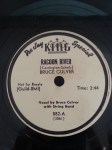
July 29, 1950 “Buddy, Stay Off of That Wine” b/w “Racoon River”
Bruce Culver
King 882 (78 rpm)
A side written by Bruce Culver, Calvin W. Hall, Jack Rogers
B side written by Jack Carrington and Henry Schelb
Both sides published with Guild Music
August 17, 1951 “These Things Are Mine”
written by Cordell Hall and Dorinda Morgan
published with Guild Music
August 17, 1951 “Sharecropper”
written by Cordell Hall and Dorinda Morgan
published with Guild Music
September 14, 1951 “I’m a Lady”
written by Cordell Hall and Dorinda Morgan
published with Guild Music
September 14, 1951 “Just For a Little While”
written by Cordell Hall and Dorinda Morgan
published with Guild Music
September 14, 1951 “Magdelena”
written by Frank Alton and Dorinda Morgan
published with Guild Music
September 28, 1951 “Saddle Up the Horses”
written by John C. Caper, Sr. and Dorinda Morgan
published with Guild Music
September 28, 1951 “You Took the Rain from the Rainbow”
written by Hite Bowman (Morgan) and Dorinda Morgan
published with Guild Music
October 6, 1951 “September in the Rain” b/w “Tabor Inn”
The Red Callender Sextette, Vocal by Bob Williams
Recorded in Hollywood 166
B side is a title variation of “Tabarin”
The October 27, 1951 Billboard called “Tabor Inn” a “slow ballad is a dull affair, as Williams’ chanting lacks presence and clarity, tho he has a good sound.”
October 3, 1951 “Bewitched”
written by Dorinda Morgan and Hite Bowman (Morgan)
published with Guild Music
October 9, 1951 “Finders Keepers”
written by Dorinda Morgan
published with Guild Music
October 9, 1951 “I Never Sent You Roses”
written by Dorinda Morgan
published with Guild Music
October 17, 1951 “I’m Fresh Cut”
written by Dorinda Morgan
published with Guild Music
October 17, 1951 “Old Time Revival”
written by Bill Anson and Dorinda Morgan
published with Guild Music
October 26, 1951 “Daydreaming”
written by Dorinda Morgan
published with Guild Music
October 26, 1951 “Dreams For Sale”
written by Betty Hall and Dorinda Morgan
published with Guild Music
October 26, 1951 “Give a Broken Heart a Break”
written by Dorinda Morgan and Al Winters
published with Guild Music
October 26, 1951 “Jelly Beans”
written by Jimmy Bryant and Dorinda Morgan
published with Guild Music;
October 26, 1951 “What Of the Things You Don’t Mention”
written by Betty Hall Jones and Dorinda Morgan
published with Guild Music
October 1951 “Mission Bells”
written by Dorinda Morgan
published with Guild Music
November 1951 “W-I-N-E” b/w “Tabarin”
The Four Flames
Fidelity F3001 (78 rpm)
B side written by Murry Wilson and William York
Label credits publishing to Timely Tunes, BMI
Registered with BMI on October 14, 1955
BMI lists Fort Knox Music and Trio Music Co (now BUG)
Fidelity was a subsidiary of Specialty Records
“Tabarin” was in the style of “Crying in the Chapel” by the Orioles
Reviewed in the December 15, 1951, Billboard
November 1951 “September in the Rain” b/w “Tabor Inn”
The Red Callender Sextette, Vocal by Bob Williams
Federal 12049
B side is a title variation of “Tabarin”
November 20, 1951 “Firstest With the Mostest”
written by Dorinda Morgan
published with Guild Music
November 20, 1951 “The Lady from Juarez”
written by Hite Bowman (Morgan) and Dorinda Morgan
published with Guild Music
November 27, 1951 “I’m An Amigo from Oswego”
written by Cordell Jones and Dorinda Morgan
published with Guild Music
November 27, 1951 “Real Fine Baby, Real Fine”
written by Dorinda Morgan and Al Winters
published with Guild Music
November 30, 1951 “Broken Down Arms Hotel”
written by Dorinda Morgan and Al Winters
published with Guild Music
November 30, 1951 “For Old Times Sake”
written by Dorinda Morgan
published with Guild Music
November 30, 1951 “Huntin’ Fer a Man”
written by Cordell Jones and Dorinda Morgan
published with Guild Music
November 30, 1951 “Memory Waltz”
written by Hite Bowman (Morgan) and Dorinda Morgan
published with Guild Music
November 30, 1951 “Pink Parasol”
written by Dorinda Morgan
published with Guild Music
November 30, 1951 “Rag Time Rufus”
written by Dorinda Morgan and Al Winters
published with Guild Music
November 30, 1951 “That’s Where I Came In”
written by Dorinda Morgan and Al Winters
published with Guild Music
November 30, 1951 “Your Smile is a Frown”
written by Dorinda Morgan and Marge Nichols
published with Guild Music
December 3, 1951 “Come Back to the Casbar”
written by Cordell Hall and Dorinda Morgan
published with Guild Music
December 3, 1951 “Daddy’s Girl”
written by Bill Anson, Hite Bowman (Morgan), and Dorinda Morgan
published with Guild Music
December 3, 1951 “I Saw What She Did Today”
written by Betty Hall and Dorinda Morgan
published with Guild Music
December 11, 1951 “It’s an Old Spanish Custom”
written by Dorinda Morgan and Al Winters
published with Guild Music
December 11, 1951 “Nell’s Nickelodeon Novelty”
written by Dorinda Morgan and Al Winters
published with Guild Music
December 26, 1951 “To Be or Not To Be”
written by Dorinda Morgan
published with Guild Music
December 28, 1951 “Ricky Tick”
written by Hite Bowman (Morgan), Dorinda Morgan and Al Winters
published with Guild Music
1951 “Christ Over Korea”
written by Dorinda Morgan
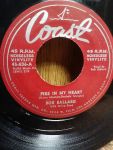
1951 “Fire in My Heart”  b/w “Rangoon”
Bob Ballard
Coast Records 836 (45 rpm and 78 rpm)
A side written by Bruce Morgan and Jack Carrington
B side written by Gerry Manners and Dorinda Morgan
1951 “Never Trust a Woman” b/w “Sharecropper”
Bob Ballard
Coast Records 837 (78 rpm)
A side written by Bruce Morgan
B side written by Cordell Hall and Dorinda Morgan
January 1952 “Tabarin” b/w “Cryin’ for My Baby”
The Hollywood Four Flames
Unique 005 (or Unique 009?)
Unique was owned by alto sax player Sherman Williams who had some kind of deal with Art Rupe’s Specialty Records and its subsidiary Fidelity Records
January 25, 1952 “Be Kind to the Stranger”
written by Dorinda Morgan and Hal Morgan
published with Guild Music
January 25, 1952 “Eight to the Barcarolle”
written by Dorinda Morgan and Al Winters
published with Guild Music
March 21, 1952 “Yo Yo”
written by Dorinda Morgan
published with Guild Music
May 8, 1952 “Heavenly Cannonball”
written by Dorinda Morgan
published with Guild Music
May 8, 1952 “My Gal”
written by O.W. Harris and Dorinda Morgan
published with Guild Music
May 1952 “Because I Kissed You Last Night”
written by Fred Clark and Dorinda Morgan
published with Guild Music
May 16, 1952 “Lay That Apple Down Eve”
written by Jack Carrington and Dorinda Morgan
published with Guild Music
May 16, 1952 “Penny Wise and Penny Foolish”
written by Dorinda Morgan and Jack Rogers
published with Guild Music
May 23, 1952 “Blacksmith Bolero”
written by Jack Holmes and Dorinda Morgan
published with Guild Music
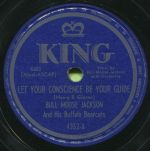
1952 “A Fool in Love” b/w “Let Your Conscience Be Your Guide”
written by Bull Moose Jackson and His Buffalo Bearcats
King 4352 78 rpm
A side written by Glover-Bowman-Morgan, published with Guild Music, and recorded in New York City September 14, 1949
BMI lists B side written by B. Morgan and Betty Hall Jones; label credits Henry B. Glover.
June 14, 1952 “Johnny” b/w “Whistle My Love”
Gisele MacKenzie
Capitol F 2110
A side published with Guild Music
Billboard advertisment: “Jack Carrington who wrote “Saturday Night Fish Fry” has surpassed all other efforts with his new tune “Johnny” sung by Gisele MacKenzie on Capitol Records.  Carringtons’s newest tune “Johnny” is controversial, popular, different.  You may love it, you may hate it, but you won’t forget it.  Hite B. Morgan, Personal Manager”
June 20, 1952 “Broken Home, Two Broken Hearts”
written by Hal Moore and Dorinda Morgan
published with Guild Music
September 9, 1952 “Some Day a Door Will Open”
written by Gerry Manners and Dorinda Morgan
published with Guild Music
October 3, 1952 Murry Wilson signed a Standard Songwriter’s Contract with Hite Morgan for “Two Step, Side Step” and was paid $50 in advance royalty by a check signed by Dorinda Morgan.  The song is published with Guild Music.  Murry most likely also signed a Standard Songwriter’s Contract with Morgan for “I’ll Hide My Tears.”
December 26, 1952 “You Better Not Let Me Catch You”
written by Elizabeth A. Hall and Dorinda Morgan
published with Guild Music
January 2, 1953 “Hollow Heart”
written by Dorinda Morgan and Jack Rogers
published with Guild Music
January 2, 1953 “Love Me Now, Now, Now”
written by Dorinda Morgan
published with Guild Music
January 2, 1953 “Home Is Where the Heart Is”
written by Dorinda Morgan
published with Guild Music
January 2, 1953 “Our Waltz”
written by Hal Moore and Dorinda Morgan
published with Guild Music
Early 1953 “Two Step, Side Step” b/w ?
The Bachelors
Palace Records
The Bachelors were Ralph Wolf, George Russell, and Jimmie Haskell
1953 ? “I’ll Hide My Tears” b/w ?
The Bachelors
Palace Records (or Aladdin Records?)
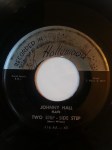
May 1953 “Painting with Teardrops (of Blue)” b/w “Two Step, Side Step”
Johnny Hall
Recorded in Hollywood 416
A side: Vocal, Johnny Hall and his Star Rangers, 416 A
B side: Vocal, J. Hall & Trio, 416 AA
Both sides written by Murry Wilson
B side published with Guild Music
May 22, 1953 “Anything for You (But Work)”
written by Cordell Hall and Dorinda Morgan
September 19, 1953 “Two Step, Side Step” b/w “Sold Out Doc”
Johnnie Lee Wills and His Boys
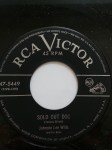
Victor 20-5449 (45 rpm), Victor 47-5449 (78 rpm); Billboard review: “Two Step, Side Step” – Bouncy novelty is a real toe tapper. Wills and the group on the vocal.  A good dance number that should keep the jukes humming in the southwest.; “Sold Out Doc” – Another good rhythm novelty with clever lyrics that feature some hot fiddlin’ along with a great hokey vocal.  Two good sides that make a real good juke box combo.

November 20, 1953 “He Is the Lord”
written by Dorinda Morgan
published with Guild Music
November 20, 1953 “Who Is the Stranger”
written by Dorinda Morgan
published with Guild Music
December 12, 1953 “You All Come”
b/w “Come Back to Your Loved Ones (My Prodigal Son)”
Jimmie Osborne
King 1295
B side credited to Bruce Morgan
B side published with Guild (ASCAP)
January 9, 1954 Billboard reported ten-year old Holly Nutter will record “The Man Upstairs” for Jubilee Records and will donate part of the proceeds from the sale of each record to the March of Dimes.  The publisher Republic Music will donate five cents from each copy of sheet music sold.  Nutter is a polio victim herself.  Her grandfather, Carl Nutter, is one of the writers of the tune.
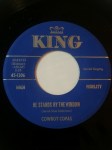
January 30, 1954 “The Man Upstairs” b/w “He Stands by the Window”
Cowboy Copas
King 1306 (78 rpm and 45 rpm)
Billboard listed “He Stands by the Window” as the A side
March 20, 1954 “The Man Upstairs” b/w “If You Love Me (Really Love Me)”
Kay Starr
Capitol F-2769
A side credited to Gerry Manners, Dorinda Morgan, and Hal Stanley, who was Kay Starr’s manager and, along with Jesse Stool, owned Vesta Music Publishing
April 9, 1954 “The Man Upstairs” registered with BMI
April 9, 1954 “The Mustard Seed”
written by Dorinda Morgan
published with Guild Music
April 17, 1954 “The Man Upstairs” b/w ?
Holly Nutter
Jubilee Records
May 8, 1954 “My Restless Lover” b/w “The Man Upstairs”
A side, Betty Johnson Three Beaus and a Peep
B side, Tony Russo with Larry Clinton Orchestra
Bell 1042 (78 rpm)
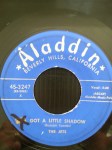
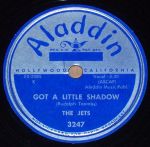
May 1954 “Got A Little Shadow” b/w “I’ll Hide My Tears”
The Jets (a reconfiguration of the Hollywood Flames)
Aladdin 3247
A side sung by tenor David Ford
B side written by Murry Wilson
published with Guild Music

June 26, 1954 The BBC added “The Man Upstairs” by Kay Starr to its list of banned records. A BBC spokesman says they will continue to blacklist records which are likely to “offend large numbers of listeners.”
June 30, 1954 R. W. Blackwood and Bill Lyles of the Blackwood Brothers killed in a plane crash.
July 2, 1954 “It Might Have Been”
written by Dorinda Morgan
published with Guild Music
July 2, 1954 “Open Door”
written by Dorinda Morgan
published with Guild Music
July 2, 1954 “Yes, I Know That He Hears Me”
written by Dorinda Morgan
published with Guild Music
July 3, 1954 “The Man Upstairs” b/w “How About Your Heart”
The Blackwood Brothers (Quartet)
RCA 47-5781
RCA EP 5093 with hardcover picture sleeve
July 9, 1954 “Buenas Noches”
written by Dorinda Morgan
published with Guild Music
August 1954 “I’m Persuaded” b/w “Heavenly Cannonball”
RCA Victor 20-5810 (78rpm) and 47-5810 (45 rpm)
B side written by Gerry Manners and Dorinda Morgan
August 7, 1954 “Two Step, Side Step” b/w “Please Don’t Laugh When I Cry”
Bonnie Lou King
King 1373
A side credited as Murray Wilson
published with Guild Music
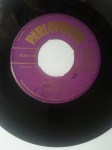
Released in the UK – Parlophone MSP 6132
August 7, 1954 Billboard review:
“Two Step, Side Step” – A cute bouncey [sic] tune with some of the ingratiating qualities of “Tennessee Waltz.”  Bonnie Lou gives the material a light, listenable reading. Ought to grab juke box loot with little trouble as well as scores of spins.
“Please Don’t Laugh When I Cry” – Bonnie Lou gives a sympathetic rendition of this tearjerker.  The tune is a pretty one and has a backing that ought to enhance its appeal on both the pop and country markets.

September 23, 1954 “Heavenly Cannonball”
written by Dorinda Morgan and Bill Anson
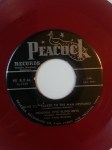
September 27, 1954 “In the Garden” b/w “Have You Talked to the Man Upstairs”
Original Five Blind Boys
Peacock 1735
B side is the Manners-Morgan-Stanley hit published with Vesta Music
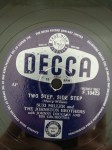
November 1954 “I’ll Hang My Heart on a Christmas Tree” b/w “Two Step, Side Step”
Suzi Miller and the Keynotes with Johnny Douglas and His Orchestra
Decca F-10423
A side written by Simmons, Lawrence
B side written by Murry Wilson
December 18, 1954 Dorinda Morgan received a BMI award for “The Main Upstairs” at the third annual award dinner given by the officers and directors of Broadcast Music Incorporated.  The formal event was held December 8, at the Hotel Pierre in New York City.  Dorinda and Hite did not attend.
Summer 1954 “Whisper Waltz” b/w “Heavenly Cannonball”
Unsure of the group’s name, but it consisted of Bee Jee Kunkel, Jean Kunkel (Bee Jee’s Mom), and Louise Acosta
Palace (78 rpm)
B side written by Dorinda Morgan
Recorded by Don Ralke.  Al Schlesinger may have produced and put the group in touch with Vita Records
January 24, 1955 “Stop Me If You’ve Heard This”
written by Dorinda Morgan
January 24, 1955 “Fantasy”
written by Dorinda Morgan and Hite Bowman Morgan
January 24, 1955 “It’s the Same Old Song”
written by Dorinda Morgan and Hite Bowman Morgan
January 24, 1955 “Merci Beaucoup”
written by Hite Bowman Morgan
January 24, 1955 “Listen to Your Heart”
written by Hite Bowman Morgan
January 24, 1955 “Three Letters”
written by Dorinda Morgan
February 21, 1955 “Run For Cover”
words by Dorinda Morgan and music by Bruce Morgan
February 21, 1955 “Cucamonga”
written by Dorinda Morgan
February 21, 1955 “And There You Are”
written by Dorinda Morgan
February 21, 1955 “Do It Yourself”
words by Hite Bowman Morgan and music by John Gray
March 21, 1955 “Lavender”
written by Dorinda Morgan
copyrighted by Hite Bowman Morgan
March 21, 1955 “Happy Landings and Bon Voyage”
written by Dorinda Morgan
April 4, 1955 “Now You Know”
written by Dorinda Morgan
April 4, 1955 “For Granted”
written by Dorinda Morgan
April 4, 1955 “Ship Ahoy”
written by Dorinda Morgan
April 11, 1955 “Confidential” copyrighted
April 19, 1955 “Ragtime Rhapsody”
written by Dorinda Morgan
April 25, 1955 “Bright Lights and Loud Music”
written by Dorinda Morgan and Mike Riley
May 20, 1955 “Rock It, Davy, Rock It”
written by Bruce Morgan
June 25, 1955 “Rock It, Davy, Rock It” b/w “The Big Bear”
Patty Ross
Aardell 0002
A side written by Bruce Morgan;Bob Ross owned a music copying service and the Aardell Record Company, 6130 Selma Avenue, Hollywood 28, Calif.  The Jaguars recorded both sides on June 4 and backed up Ross’s daughter, Patty, on her version of “Rock It, Davy, Rock It,” a parody of the then-popular Davy Crockett song, and “The Big Bear.”  Patty Ross sang on some of Dorinda’s songs.  Both versions of “Rock It, Davy, Rock It” were reviewed in the July 2 Billboard.  When “I Wanted You” started to get local airplay, the Jaguars were invited to appear on Hunter Hancock’s first Rhythm and Bluesville television show.
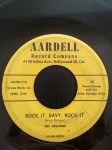
June 25, 1955 “Rock It, Davy, Rock It” b/w “I Wanted You”
The Jaguars
Aardell 0003
Vocal Group with The John Savage Orchestra
A side written by Bruce Morgan and sung by Val Poliuto

July 12, 1955 “Beloved, Beloved”
written by Dorinda Morgan
July 12, 1955 “Lost, Strayed or Stolen”
written by Dorinda Morgan
July 22, 1955 “The Woman’s Touch”
written by Dorinda Morgan
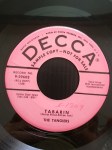
August 1955 “Tabarin” b/w “I Won’t Be Around”
The Tangiers (a reconfiguration of The Hollywood Flames)
Decca 29603
A side written by Murry Wilson and William York
Label lists the publisher as Golden State Songs, the company from which Don Pierce acquired more than 140 copyrights from John Dolphin.
August 11, 1955 “Fool Moon an’ Empty Hands”
written by Bruce Morgan
August 21, 1955 “Will O the Wisp”
written by Dorinda Morgan
published with Guild Music
September 2, 1955 “All Roads Lead to Heaven”
written by Dorinda Morgan
September 2, 1955 “I Walk to Water”
words by Dorinda Morgan
music by Cecil Godkin
September 16, 1955 “Marigold Polka”
words by William John Riley, Jr.
music by Roy Nack
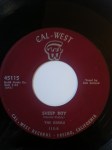
September 16, 1955 “Sheep Boy”
words by Harry A. Hunter and music by Charles Ruddy
published with Guild Music
September 16, 1955 “You’re Gonna Get It”
written by William John Riley, Jr.
published with Guild Music
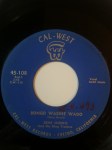
September 16, 1955 “Bongo Washie Wado”
written by Gene Morris
published with Guild Music
September 16, 1955 “Gene Blows the Blues”
written by Gene Morris
published with Guild Music
1955 “Bongo Washie Wado” b/w “Gene Blows the Blues”
Gene Morris and His King Trotters
Cal-West 108 (C.W. 120 and 121)
both songs published with Guild Music
Fall 1955 “Glad Reunion Day”
b/w “I Wanta Go There”
The Chordsmen Quartet,
with piano accompaniment by Lou Guastella
Cal-West 125
both songs published with Guild Music
Fall 1955? “I Wouldn’t Trade” b/w “Master the Tempest Is Raging”
Chordsmen Quartet
Cal-West 326
A side written by J. D. Sumner
published with Guild Music
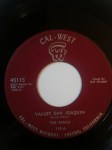
Fall 1955 “Valley San Joaquin” b/w “Sheep Boy”
The Rebels
Cal-West 45115 (A-side 838-A; B side 841)
A side written by Bruce Culver
both sides published with Guild Music
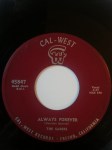
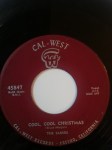
November 1955 “Always Forever” b/w “Cool, Cool Christmas”
The Sabers
Cal-West 847
A side written by Dorinda Morgan
B side written by Bruce Morgan
Billy Storm’s first record
November 22, 1955 “Dedicated to You”
written by Bruce Morgan
published with Guild Music
January 3, 1956 “You”
written by Dorinda Morgan
published with Guild Music
February 3, 1956 “A Short Walk”
words by Bruce Morgan and music by Joe Smith
published with Guild Music
March 5, 1956 “How Could You”
written by Dorinda Morgan
March 21, 1956 “Turn Back the Clock”
written by Dorinda Morgan
March 21, 1956 “Fancy Pants”
written by Dorinda Morgan
March 21, 1956 “Change the Alphabet”
written by Dorinda Morgan
March/April 1956 “Dedicated to You” b/w “Short Walk”
Joe Smith
Cal-West 850
A side written by Morgan-Bowers
Both sides published with Guild Music
Joe Smith soon changed his name to Sonny Knight.  This version is a sparse production with just vocal and guitar.
April 1956 “Dedicated to You” b/w “Short Walk”
Joe Smith
King 4902
Joe Smith soon changed his name to Sonny Knight.
April 13, 1956 “Lost Boundaries”
written by Dorinda Morgan
published with Guild Music
April 13, 1956 “Love Will Find a Way”
written by Dorinda Morgan and Al Winters
published with Guild Music
May 18, 1956 “[A] Gob’s Sob Sister”
published with Guild Music
May 18, 1956 “My Grandpa”
written by Dorinda Morgan
published with Guild Music
June 29, 1956 “Out of Bounds”
written by Dorinda Morgan
published with Guild Music
June 29, 1956 “Second Honeymoon” written by Dorinda Morgan
published with Guild Music
July 20, 1956 “Yodeling Waltz”
written by Hite Bowman (Morgan) and Dorinda Morgan
published with Guild Music
July 27, 1956 “You’re Only Young Once”
written by Dorinda Morgan
published with Guild Music
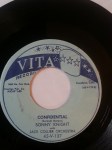
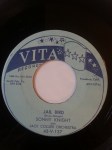
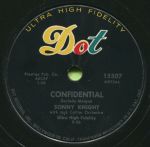
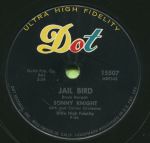
August 1956 “Confidential” b/w “Jailbird”
Sonny Knight with Jack Collier Orchestra
Vita 137
A side written by Dorinda Morgan
B side written by Bruce Morgan
Jack Collier was a pseudonym for Ernie Freeman
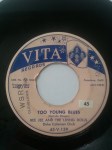
August 31, 1956 “Too Young Blues”
written by Dorinda Morgan
August 31, 1956 “Jail Bird”
written by Bruce Morgan
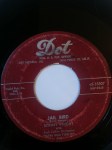
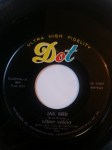
September 1956 “Confidential” b/w “Jailbird”
Sonny Knight
Dot 15507

September 22, 1956 “Too Young Blues” b/w “Teen Age Waltz”
Bee Jee & the Living Dolls
Vita 45 V-139
A side written by Dorinda Morgan
B side written by Verne-Morgan-Bowman, BMI now lists only Bruce Morgan
both sides published with Guild Music
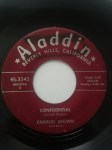
late Sept 1956 “Confidential” b/w “Trouble Blues”
Charles Brown
Aladdin 3342
October 25, 1956 “Lonely Room” written by Dorinda Morgan
published with Prestige Publishing
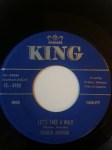
late Oct 1956 “Confidential” b/w “Let’s Take a Walk”
Bubber Johnson
King 4988
November 2, 1956 “Night Time” written by Dorinda Morgan
published with Prestige Publishing
November 2, 1956 “Worthless and Lowdown”
written by Dorinda Morgan
published with Prestige Publishing
November 24, 1956 “You” b/w “Fool in Love”
Bob Williams
Vita 142
A side published with Prestige Publishing
B side written by Hite Morgan and published with Guild Music
December 15, 1956 “Confidential” b/w “Tiger Lily”
Rusty Draper
Mercury 70989
December 28, 1956 “Every Word of the Song”
written by Dorinda Morgan
published with Prestige Publishing
January 1957 “Worthless and Lowdown” b/w “End of a Dream”
Sonny Knight
Dot 15542
both sides written by Dorinda Morgan
and published with Prestige
Publishing
March 23, 1957 “I Love, Love, Love, Love, Love You Baby” b/w “How Can You Tell Him”
Pat O’Day
Golden Crest 101
A side published with Guild Music
1957 Audree and Murry Wilson copyrighted “Chinese Waltz” with Guild Music
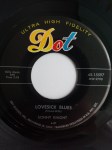
June 17, 1957 “Lovesick Blues” b/w “Insha Allah”
Sonny Knight
Dot 15597
B side written by Dorinda Morgan and published with Prestige Music
August 19, 1957 “Dedicated to You” b/w “Short Walk”
Sonny Knight
Starla S-1 (Starla was a subsidiary of Original Sound)
A side written by Morgan-Egnoian
B side written by Morgan-Smith-Egnoian
same vocal track as on Cal-West, but Art Laboe added orchestration and a background chorus, and promoted the song live from Scrivener’s Drive In.
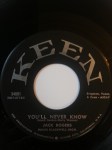
mid-September 1957 “Hey Team” b/w “You’ll Never Know”
Jack Rogers, Bumps Blackwell Band
Keen 3-4001
A side written by Jack Rogers
published with Guild Music
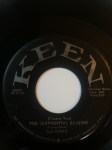
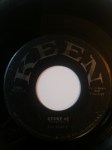
mid-September 1957 “(I Love You) for Sentimental Reasons” b/w “Desire Me”
Sam Cooke
Keen 3-4002
B side written by Bruce Culver
published with Guild Music
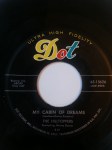
September 1957 “Dedicated to You” b/w “My Cabin of Dreams”
The Hilltoppers
Featuring Jimmy Sacca
Dot 15626
A side published with Guild Music
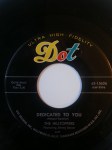
October 1957 “Dedicated to You” b/w “Short Walk”
Sonny Knight
Dot 15635
A side written by Morgan-Egnoian
B side written by Morgan-Smith-Egnoian
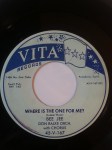
October 14, 1957 “Where Is the One For Me?” b/w “Whisper Waltz”
Bee Jee, Don Ralke Orchestra with Chorus
Vita 167
A side written by Leona Wenz
published with Swell Music, BMI
October 1957 “Sunday Kind of Love” b/w “Beg and Steal”
The Highlanders
Rays 36
Marv Goldberg says these are not the Squires, but rather James Manning’s group formed at an Air Force Base in San Diego
Unsure if Hite Morgan was involved
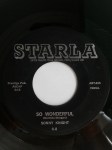
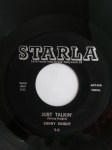
Mid-Feb 1958 “So Wonderful” b/w “Just Talkin’”
Sonny Knight
Starla S-8
A side written by Dorinda Morgan and published with Prestige Music
B side written by Sonny Knight and published with Guild Music
April 21, 1958 “Bag Pipe Stroll” b/w “Full House”
T-Birds
Andex 4011
B side published with Guild Music
The T-Birds were a group of college-aged kids from Fresno.  Andex was a subsidiary of Keen Records.
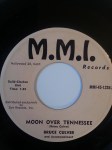
June 2, 1958 “Square Record” b/w “Moon Over Tennessee”
Bruce Culver and Accompaniment
MMI 1235
Both sides written by Bruce Culver and published with Guild-Clockus Music.  MMI was owned by Jim Hawthorne and had a one-year distribution deal with Dot Records.
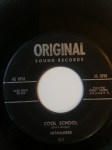
June 1958 “Chapel of Love” b/w “Cool School”
Hitmakers
Original Sound 1
A side credited to Morgan-Egnoian
B side written by Bruce Morgan
both sides published with Guild Music
August 1958 “Dreamworld” b/w “5, 7, or 9”
The Calvanes with the Val Anthony Combo
Deck 579
Both sides written by Bruce Morgan and published with Clockus-Guild Music
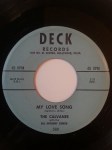
September 1958 “Horror Pictures” b/w “My Love Song”
The Calvanes
Deck 580
Both sides published with Guild Music
A side inspired by “Western Movies” by the Olympics
“Lavender” and “You’re Only Young Once” were recorded by the Calvanes, but remain unreleased
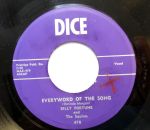
Fall 1958 “Everyword of the Song” b/w “Listen to Your Heart”
Billy Fortune and the Squires
Dice 478
A side written by Dorinda Morgan
B side written by Bruce Morgan
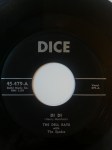
Fall 1958 “Di Di” b/w “Full House”
The Dell Rays with the Spades
Dice 479
B side by the Spades with the Dell Rays
Both sides published with Guild Music
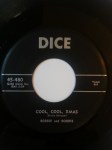
December 1958 “Teen Age Party” b/w “Cool, Cool Christmas”
Bobbie and Boobie
Dice 480
both sides written by Bruce Morgan and published with Guild Music
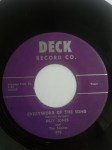
December 1958? “Everyword of the Song” b/w “Listen to Your Heart”
Billy Jones and the Squires
Deck 478
A side published with Prestige Publishing
B side just as Billy Jones
B side published with Guild Music

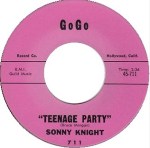
late 1950s? “Teenage Party” b/w “Madness”
Sonny Knight
GoGo 711
A side written by Bruce Morgan
published with Guild Music
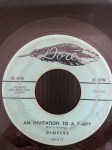
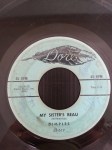
early February 1959 “An Invitation to a Party” b/w “My Sister’s Beau”
Dimples (Dimples is Billie Jean Kunkel)
Dore 517
reviewed in the March 30, 1959 Billboard
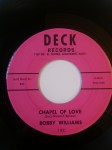
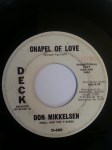
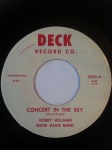
late March 1959 “Chapel of Love” b/w “You”
Bobby Williams
Deck 142
A side credit changed from Dorinda Morgan alone to Bruce Morgan and Art Laboe
B side written by Dorinda Morgan
May 25, 1959 “Never Want for More” b/w “Frankie and Johnny”
Jack Rogers
Keen 2021
A side arranged by Herb Alpert
published with Guild Music
Summer 1959 “The Ballad of Chavez Ravine (The Corrido of Chavez Ravine)” b/w ?
Los Hermanos Villa
Peerless 241
August 1959? “The Way to My Heart” b/w “Angel of Mine”
Billy Storm
Barbary Coast 1001
The Squires provided uncredited background vocals
A side was recorded by Hite in his home studio
late 1950s? “Enchanted Wood” b/w “Teddy Goes to Town”
Teddy Wood
Deck 611
Both sides published with Guild Music
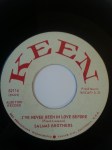
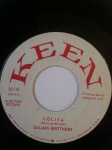
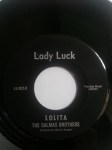
Spring 1960 “I’ve Never Been in Love Before” b/w “Lolita”
Salmas Brothers
Keen 2116
B side written by Dorinda Morgan
published with Prestige Publishing
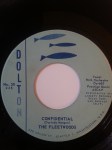
November 14, 1960 “Confidential” b/w “I Love You So”
The Fleetwoods
Dolton 30
A side published with Prestige Publishing
B side is the Fleetwoods with the Frantics
“Confidential” b/w “I Love You So”
The Fleetwoods
Dolton 30
A side published with Prestige Publishing
B side is the Fleetwoods with the Frantics
September 15, 1961 “Surfin’”
written by Brian Wilson and Mike Love
Standard Songwriter’s Contract with Guild Music
1960 “El Co-Co” b/w/ “Kook-a-Roacha”
Val Valenrico
Deck 903
Both sides written by Stern-Polito
Both sides published with Guild Music
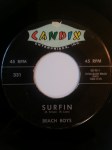
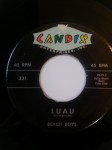
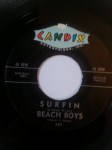
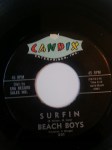
November 27, 1961 “Surfin’” b/w “Luau” Beach Boys
Candix 331
A side written by Brian Wilson and Mike Love
B side written by Bruce Morgan
A side published with Drink-Guild Music
B side published with Guild Music
December 1961 “Surfin’” b/w “Luau”
Beach Boys
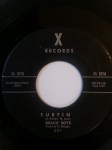
X Records 301
A side written by Brian Wilson and Mike Love
B side written by Bruce Morgan
Both sides published with Drink-Guild Music
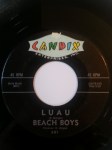
January 1962 Surfin’” b/w “Luau”
Beach Boys
Candix 301
A side written by Brian Wilson and Mike Love
B side written by Bruce Morgan
Both sides published with Guild Music
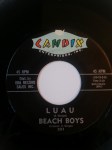
January 15, 1962 “Surfin’” b/w “Luau” Beach Boys
Candix 301 with the label notation “Dist. by ERA RECORD SALES Inc”
A side written by Brian Wilson and Mike Love
B side written by Bruce Morgan
Both sides published with Guild Music
January 29, 1962 “Surfin’ Safari”
written by Brian Wilson and Mike Love
Standard Songwriter’s Contract with Guild Music
published with Guild Music
January 29, 1962 “Surfer Girl” written by Brian Wilson
Standard Songwriter’s Contract with Guild Music
published with Guild Music
January 1962 “Judy” written by Brian Wilson
A Standard Songwriter’s Contract may have been completed with Guild Music
published with Guild Music
January 1962 “Karate” written by Carl Wilson
A Standard Songwriter’s Contract may have been completed with Guild Music
published with Guild Music
April 1962 “Barbie” b/w “What Is a Young Girl Made of?”
Both sides written by Dorinda Morgan, but credited to Bruce Morgan
Both sides published with Guild Music
April 28, 1962 “I Built a Fence Around My Heart” b/w “My Blues Are Gone”
Cowboy Copas
King 5638
A side published with Guild Music
June 4, 1962 “Surfin’ Safari” b/w “409”
A side written by Brian Wilson and Mike Love
A side published with Guild Music
July 16, 1962 “Brass Ring”
written by Bruce Morgan; arranged by Mark Hilder
published with Guild Music
August 10, 1962 “Anything for You (but Work)”
written by Dorinda Morgan
published with Prestige Publishing
August 10, 1962 “I Built a Fence Around My Heart”
words by Cowboy Copas and music by Jimmy Bryant
published with Guild Music
August 10, 1962 “Can’t You See”
written by Calvin Hall
published with Guild Music
Summer or Fall 1962 “Runky” b/w “Latina”
Charles Wright and the Malibus
Titanic 5003
A side written by Barbara Adkins, Bruce Morgan, and Charles Wright
A side published with Guild Music and Wright-Gerstl Music
Bob Vaught and the Renegades provided uncredited instrumental support
September 15, 1962 “Border Town”
written by Jack Rogers
published with Guild Music
September 17, 1962 “Runky”
written by Barbara Adkins, Bruce Morgan, and Charles Wright
published with Guild Music
December 1962 “Border Town” b/w “The Soul”
The Rhythm Kings Challenge 9178
A side written by Jack Rogers
published with Guild Music
December 31, 1962 “Exotic”
written by Bruce Morgan
published with Guild Music
December 31, 1962 “Stranger”
written by Jack Carrington
published with Guild Music
December 31, 1962 “Shoot De Peestol, John”
written by Jack Carrington
published with Guild Music
December 31, 1962 “Must a Person Pay Forever”
written by Bruce Morgan
published with Guild Music
December 31, 1962 “Promise Her Anything”
written by Rosemary Koshmider
published with Guild Music
December 31, 1962 “Love Me or Please Let Me Be”
Words by Jack Carrington and music by Henry Glover
published with Guild Music
1962 “Church Key Twist” b/w “Bo’ Gater”
Bob Vaught and the Renegaids with Barbara Adkins
Bamboo 520
B side by Bob Vaught and the Renegaids
1962 “Love Ain’t Nothin’ But the Blues”
written by Dorinda Morgan
1962 “I Heard From the Man Upstairs”
written by Bill Anson and Dorinda Morgan
1962-1963? “Chapel of Love” b/w “Where I Came In”
Don Mikkelsen, Edell and the T-Birds
Deck Records (45-D-425 A)
A side published with Guild Music
1963 “Surfin’ Tragedy” b/w “Exotic”
Bob Vaught and the Renegades
GNP Crescendo 193
B side written by Bruce Morgan
published with Guild Music
1963 “Laguna Limbo Luau”
Dave Myers and the Surftones
Album
Label
June 15, 1963 “Phantom Surfer”
written by Dorinda Morgan
published with Prestige Publishing
July 1963 “Surfer Girl” b/w “Little Deuce Coupe”
A side written by Brian Wilson
published with Guild Music
August 1, 1963 “Doin’ the Surf”
words by Bruce Morgan and music by Bob Vaught
published with Guild Music
August 17, 1963 “Barbie”
written by Bruce Morgan
published with Guild Music
October 15, 1963 “The Unbeliever”
written by Bruce Morgan
published with Guild Music
October 15, 1963 “Sally’s (It’s You)”
written by Chris Barnet (pseudonym of Chris Schweinhard)
published with Guild Music
October 15, 1963 “Some Day”
written by Chris Barnet (pseudonym of Chris Schweinhard)
published with Guild Music
October 15, 1963 “Have a Heart”
words by Dorinda Morgan and music by Al Anson
published with Prestige Publishing
October 15, 1963 “Laugh Pagliacci”
written by Dorinda Morgan
published with Prestige Publishing
October 15, 1963 “Breakthrough”
written by Adrian Lloyd
published with Guild Music
October 1963 “Surfin’ in Paradise” b/w “Doin’ the Surf”
Bob Vaught and the Wheels
Felsted 8682
B side written by Bruce Morgan and Bob Vaught
B side published with Guild Music
produced by Hite Morgan
October 1963 “Breakthrough” b/w “Cherry Pie”
Adrian and the Sunsets
Sunset Records 602
A side published with Guild Music

December 1963 “Phantom Surfer” b/w “Shootin’ Beavers”
The Tornadoes
Aertaun 103
A side written by Dorinda Morgan and Rue Barclay
A side published with Prestige Publishing
December 1963 “Phantom Surfer” b/w “Lightnin’”
The Tornadoes
Aertaun 103
A side written by Dorinda Morgan and Rue Barclay
A side published with Prestige Publishing
1964 “Barbie” b/w “Lollipops”
The Alley Kats
Impact 31
A side written by Gerry Manners and Dorinda Morgan
1964 “Recuerdos de Juventud”
b/w “Teenage Memories”
A side by Jaymenoll,
Accompanist Jaymenoll Troupe
B side by Sid Chacon,
Accompanist Jaymenoll Troupe
Mod Record Co. 331
B side written by Dorinda Morgan
Both sides published with Prestige Publishing
1964 “Chicana Girl” b/w “Viva Chicano”
The Runabouts
Mod Record Co. 901
A side written by George Salmas
Both sides published with Guild Music
1964 “Sacred Love” b/w “Skyjack”
The Runabouts
Mod Record Co. 912
A side written by Dorinda Morgan
published with Prestige Publishing
1964 “Blanket Tossin’ Time” b/w “The Troll Song”
Alleykats
Hall of Fame Record Company HOF-417
A side written by Hite Bowman
B side written by Dorinda Morgan
1964 “Standing At the Edge of the Sea” b/w “Back on the Block”
Sam Anderson & the Telstars
Deck 152
Is this Hite Morgan’s Deck Records?
1960s? “Open the Door Richard” b/w “Genevieve”
Lennie Roberts
Deck 926
B side published with Guild Music and Romero Music
April 1964 “Farmer John” b/w “Duffy’s Blues”
The Premieres
Faro 615 (also released on War 5443)
B side engineered by Bruce Morgan and the first recording at Stereo Masters. Faro was owned by Eddie Davis, who also produced the session.
late 1964 “Close to Me” b/w “Take A Chance”
The Charades
Original Sound OS-47
A side written by Bruce Morgan
published with Guild Music
1964? “Concert in the Sky” b/w “Corkscrew”
A side by Bobby Williams, Eddie Davis Band
B side by Eddie Davis Band
Deck 2226
A side written by Bruce Morgan
A side published with Guild-Mercedes
B side published with Mercedes-Guild
late 1965 “Walkin’ by the School” b/w “Funny Feelin’”
The Guys
Original Sound 0S-56
B side published with Guild Music
December 1966 “The Girl From Las Vegas” b/w “Lolita”
The Salmas Brothers
Lady Luck LL-002
produced by Hite B. Morgan
published with Prestige Music
March 25, 1967 “Where You Gonna Go” b/w “Teenage Millionaire”
Art Guy
Valiant 762
A side produced by Bruce Morgan
B side written by Dorinda Morgan and Art Guy, and produced by Bruce Morgan
Both sides published with Guild Music
June 1967 “Reality” b/w “You’ve Got Me”
The Prodigal
Mercury 72688
written by Gary Hall
produced by Bruce B. Morgan
published with Guild Music
1967 “I’m Gonna Dance” b/w “On Sunset”
The Decades
Lady Luck LL-001
B side produced by Morgan-Guy
B side published with Guild Music
1967 “Stand Up Today” b/w “Here to Stay”
The Mal-T’s
Lady Luck LL-003
Both sides produced by Bruce Morgan
A side published with Guild Music
August 5, 1981 “Borne on the Wind”
Words and music by Dorinda Morgan and Bruce Morgan
May 12, 1983 “Bless All the Animals”
written by Dorinda Morgan and Bruce Morgan
January 23, 1984 “Marilyn”
written by Dorinda Morgan and Bruce Morgan
published with Guild Music
February 14, 1984 “Dennis”
written by Dorinda Morgan and Bruce Morgan
published with Guild Music
February 15, 1984 “I Am a Man”
written by Dorinda Morgan and Bruce Morgan
published with Guild Music
April 19, 1990 “Walls”
music by Dorinda Morgan and words by Bruce Morgan
June 13, 1990 “Standing in the Wings of Life”
written by Dorinda Morgan and Bruce Morgan
August 8, 1994 “Santa, Please”
music by Jimmy Hassell and Kin Vassy, and words by Bruce Morgan
2000 or later “The Man Upstairs” b/w “The Man Upstairs”
Wally Storm
Alark Records and Tapes WSM-314
written by Dorinda Morgan
published with Guild Music
October 10, 2008 “Don’t Put All Your Dreams in One Basket”
Randy Crawford and Joe Sample
No Regrets
album
PRA Records
March 24, 2011 The Mountain Text, perhaps a book or short story, written by Dorinda Morgan in 1970

The following songs are published with Guild Music, but little else is known about them:

“The Best Part of Life Is You”
written by Maxine Craven, Dorinda Morgan, and Al Winter

“Christmas Eve on the Prairie”
written by Henery (Hank) Schelb and Dorinda Morgan

“Davy Crockett’s Christmas”

“Don’t Mention Her Name”
written by Bruce Morgan

“Drum Medley”

“Get Out”

“God Did a Wonderful Thing”

“Harvey”
written by Dorinda Morgan

“Hey, Little Echo”
written by Bruce Morgan

“Hi Hat”

“I Reached for the Stars”

“I Will Do”
written by Hite Bowman Morgan

“It Was Fun While It Lasted”
written by Betty Hall and Al Morgan

“It’s the Same Old Boogie”
written by Betty Hall

“Jungle Time”
copyrighted by Bruce Morgan

“Lure of the Jungle”
written by Hite Bowman (Morgan)

“Mommie”
written by Bruce Bowman

“Moonlight on the Hudson”

“Mr. No Good”

“My Wiggle Nose Bunny”
copyrighted by Dorinda Morgan

“Nobody Wants Me To Sing”

“Nobody’s Home No More”

“Ooh La La”

“Out of a Dream World”
written by Bruce Morgan

“Patricia-Lorraine”
written by Hite Bowman (Morgan) and Dorinda Morgan

“Promise Her Anything”

“Put Your Trust in the Lord”
written by Dorinda Morgan

“Rendezvous Stomp”

“She Don’t Love Me Anymore”
written by Dorinda Morgan

“Stay on the Sunny Side”
written by Hite Bowman Morgan

“Steppin’ Out”

“Still Waters”
written by Bruce Morgan

“Strictly from Dixie”
written by Dorinda Morgan and Al Winter

“Tiny Tim”
written by Hite B. Morgan and others

“Who Dun It?”
written by Dorinda Morgan and Al Winter

“Wind, Blow Soft”
written by Dorinda Morgan

“Young Girl’s Heart”
written by Bruce Morgan

“Zoom, Zoom, Zoom”
written by Hite Bowman Morgan

With thanks to contributor Chris Woods.

Surf Cinema and George Freeth, Jr., the Father of California Surfing

B

ud Browne was the originator of the surf film genre and the first to make surf films for a commercial market.  His first surf film, Hawaiian Surfing Movie, debuted in 1953 at Adams Junior High School in Santa Monica.  Tickets were sixty-five cents.  “After introducing the film on stage,” recalled Browne, “I hurried up to the projection room to join the operator of an arc projector I had hired.  I could see the screen from a small window.  I had a microphone in hand and a tape player with music.  It was a nervous time, trying to coordinate telling the projectionist when to switch from sound to silent speed and vice versa, playing music in some places and not in others, and narrating when needed.  Sometime during the show, I remember the take-up reel quit turning and much of the forty-five minute reel of film piled up on the floor.  Although this was sort of a nerve wracking experience, I’ve always thought of the overall event as going very well.”

Browne filmed in Hawaii during the winter, edited and spliced the footage together the following spring, and showed it up and down the California coast that summer.  He got the surf film idea from Warren Miller’s ski films and, in a sense, carried forward the work of John “Doc” Ball, the dentist and surfer who photographed and shot 16-mm footage of the California surfing scene in the 1940s.  For roughly four years (1953-1956), Browne was pretty much the only guy making surf films.

In 1957, Browne released The Big Surf and Greg Noll entered the market with his first surf film, Search for Surf.  Over the next four years, Noll had four or five films with that title and they became promotional vehicles for his own line of surf boards.  In 1958, Browne explored the surf scene in Australia and New Zealand with Surf Down Under, and a felt a little more competition when he returned to California as two new film makers had entered the field.  John Severson’s first surf film was simply titled Surf.  Bruce Brown (no relation to Bud and spelled without the “e”) made an impressive debut with Slippery When WetBud Browne slippery when wetIn 1959, all four major surf film makers released new films – Cat on a Hot Foam Board (Bud Browne), Surf Crazy (Bruce Brown), Surf Safari (John Severson), and Surfin Highlights (a compilation by Greg Noll) – and yet another film maker, Walt Phillips, debuted with Sunset Surf Craze.  So, during summer 1959, as Brian and Al prepared for their senior year at Hawthorne High School, there were plenty of surf films to check out.  In April 1960, Browne offered Surf Happy.  Meanwhile, Severson published his debut issue of Surfer magazine to promote his third film, Surf Fever.

Severson was born in 1933 and raised in the Pasadena and San Clemente area.  He began surfing when he was thirteen years old.  In high school, his creativity expressed itself through newsletter editing, photography, cartooning, painting, and surfing.  In 1949, he thought about publishing a surf-related magazine, but shelved the idea thinking there wasn’t enough interest to make it commercially viable.  He was an art major in college and, in 1955, painted an abstract scene of the San Clemente pier with “Be bop surfers and pointy little surf boards.”  After college, he entered the U.S. Army and was stationed in O’ahu, Hawaii, where he continued to surf.  Influenced by the surf films of Bud Browne, he made a 16-mm color movie called Surf.  He spliced taped music together and wrote a script that could be narrated live while the film was being shown.  He drew and block-printed a dramatic black and white handbill to promote the film.  The word SURF towers over a hollow outline of a tiny surfer emerging from a monstrous jagged wave.  Severson was unable to leave Hawaii, so he asked his friend and fellow surfer Fred Van Dyke to show it in high school auditoriums and other halls along the California coast.  After his discharge from the Army in 1958, Sever57-58 hand drawn poster Seversonson made a second film called Surf Safari and in 1959 took it on the road himself.  “The first real film was Surf Safari,” he recalled.  “Where I had a chance to devote myself to the whole production.  I liked Henry Mancini and I liked that Peter Gunn theme.  And I had taken a picture of my board, holding a Voit rubber bag with a movie camera in it, and shot my feet surfing to a red board, blue/green water, white foam flying, and little bubbles on the board bouncing off the wax, it was just great.  Screaming audiences, standing ovations.  In the middle of the film, they would just stand up and cheer, it was a wondrous time.”  He found surfers were hungry for images of surfers and monster waves.  The small 9″ x 12″ handbills promoting his movies would disappear from the telephone poles on which they were stapled.  And Bud Browne was selling black and white stills from his films for a buck apiece.  To promote his 1960 film, Surf Fever, Severson produced a black and white Annual he called Surfer that morphed into the first magazine devoted to the sport.

World champion surfer Mike Doyle recalled the viewing of Bud Browne’s Surf Happy at the Pier Avenue School in Hermosa Beach.  “I was driving home from work one day, when I pulled up to a corner stoplight and noticed a poster stapled to a telephone pole.  The poster was advertising a new surf movie that was going to play at the Pier Avenue School.  There was a photo on the poster of a powerful, Hawaiian-looking wave.  The surfer in the photo was leaning hard into the wave, crouched down with one hand on the rail and one hand raised in the air.  There was something vaguely familiar about it.  Then I realized the film was Bud Browne’s latest, Surf Happy, and the surfer on the poster was me.  Some people have forgotten how surf movies were distributed in those days.  The regular film distribution channels were not open to surf movies.  There just weren’t enough surfers to make it worthwhile for the big film distributors.  So filmmakers like Bud Browne, John Severson, and Bruce Brown, had to create their own channels.  Every little beach town up and down the coast had a civic auditorium, a high school, a YMCA, that could be rented for one or two nights.  The filmmaker would send out a crew a few days in advance of the showing to nail posters on telephone poles and bulletin boards.  Then the news would spread by word of mouth.  The filmmaker would roll into town with the film the day of the showing and help set up chairs in the auditorium.  He would even sell the tickets at the door.  Because a lot of the early films didn’t have sound, he would do his own live narration.  If a good crowd turned out, he might have enough money to get a motel room for the night.  If not, he would sleep in his car.”

David Earl “Dewey” Weber was one of the legendary surfers in southern California in the 1950s and 1960s.  Weber was born in Denver, Colorado, in 1938, an only child of a middle-class German couple.  His father, Earl, drove a truck, and his mother, Gladys, worked at the Nabisco cracker factory.  His babysitter was also a lifeguard at the municipal pool, so by age four, Dewey could swim the length of the pool twice underwater.  Born with two webbed toes on each foot, his aptitude for the ocean seemed pre-destined.

The family moved to California in 1943 when Dewey was five and settled into Manhattan Beach.  He learned to fish off the pier with his mother and her friends and, as he got a little older, spent hours watching the ocean exploits of surfers.  When he was nine, a local surfer named Barney Biggs spotted him watching from the pier and offered him a used eleven-foot board that probably weighed twice what he did.  It took him two years before he could actually ride a wave.  But he persisted and, for the next several years, honed his skills.  In 1951, Earl Weber acknowledged his son’s perseverance and loaned him thirty-five dollars to buy a used board from Bev Morgan, a local surfer.

The early surfboards were redwood behemoths, eleven feet long and more than 100 pounds.  Many of the scientific and technological advancements made through wartime research and development found peacetime domestic applications.  Surfing was the beneficiary of at least two such advancements.  Water-proof glue, developed prior to World War I, enabled a surfboard’s component wood pieces to be glued together rather than bolted.  Advances in the chemistry of resin, fiberglass, and styrofoam during World War II enabled surfboard makers like Bob Simmons to develop the so-called Sandwich Board, sealed plywood over a styrofoam core coated with fiberglass and resin.  By the early 1950s, guys like Simmons, Joe Quigg, Matt Kivlin, and Dale Velzy, revolutionized surfboard manufacturing by working with these lighter materials.

dewey weber pig board dewey_weber_10_l

As the sport grew in popularity, surfers formed clubs generally based on where they surfed, like the 1st Street Gang, the 17th Street Gang, the 22nd Street Gang, and the Palos Verde Surfing Club.  “The South Bay surfers were really ripping at that time,” recalled Mike Doyle.  “Guys like Dewey Weber, Henry Ford, Freddie Pfahler, Mike Zuetell, and Peff Eick, had their own clique, the 22nd Street Gang. They all lived in Manhattan or Hermosa Beach and they all went to Mira Costa High. They hung out at the wall on 22nd Street, just north of the Hermosa pier, which was the coolest place in Hermosa Beach.  And where there were two or three great hamburger joints and the famous Green Store on the corner.  They had their own style of talking and dressing.

“They had their own little world and I wanted so badly to be part of it.”

They wore faded jeans, blue T-shirts, bitchin’ blue tennis shoes, and wore St. Christopher medals around their necks.  Dewey Weber, who was a yo-yo champion, sometimes broke the gang’s dress code by wearing his red Duncan Yo-Yo jacket but, other than that, they always looked like perfect clones of each other.  And they did everything together.  They surfed together in the morning and they drank together every night.  All weekend long, they’d be standing there in front of the wall, talking about who got laid the night before, who got drunk, and who got put in jail.  They’d be all hung over with vomit stains on their pant cuffs and seaweed wrapped around their necks.  They had their own little world and I wanted so badly to be part of it.”

One of the most prestigious clubs was the Manhattan Beach Surf Club.  Members obtained permission from local authorities to build a 15′ x 40′ clubhouse among the pilings under the Manhattan Beach pier.  City officials hoped the clubhouse would help contain the unkempt surfers to just one part of the community.  Club members wore a distinctive leather thong tied in a square knot around their left ankles and woe to the non-member gremmie who dared wear one.  One brave soul who wore a thong despite being denied membership was stripped naked and tied to a stop sign.  One of the club’s most colorful and influential members was Dale Velzy who, with the help of his cabinet-maker grandfather, shaped his first board when he was ten years old.  As a kid he earned the nickname Hawk because he could spot a coin in the sand from a great distance.  After a two year stint in the Merchant Marines during the war, Velzy was back shaping redwood/balsa combination boards for his friends in the clubhouse.  When the wood shavings got to be too much for the clubhouse, he opened Velzy Surfboards in Manhattan Beach in 1950.

In 1953, Henry “Hap” Jacobs and Bev Morgan opened Dive N’ Surf.  Jacobs made boards and Morgan made wetsuits.  A year later, Hap and Hawk joined forces and opened Surf Boards by Velzy and Jacobs at 4821 Pacific Avenue and Manhattan Beach Boulevard near the Hermosa Beach pier.  They made about a dozen custom balsa boards a week.  Velzy would shape them from the blanks (lengthy boards glued together on which the shape of the board was drawn and then cut) and Jacobs would glass them (apply the polyurethane).  They became the largest manufacturer of surfboards on the coast.

dewey weber colorful boards3

Dewey Weber played quarterback his freshman year at Mira Costa High School in 1952.  But at 5’3″, muscular and wiry, he was better suited for wrestling at which he lettered as a freshman and was California Interscholastic Federation (CIF) wrestling champ for three years.  “We had a group at school that was mostly surfers and we ran the place,” recalled Weber.  “The other group was the lowriders.  Both groups were very close.  They rode their motorcycles and hopped up their cars, and we surfed.  We came together against all the football players.  It worked out great.”

Dale Velzy began providing Weber, then a high school sophomore, with free boards in exchange for promoting his boards and shop.  The arrangement was informal, but it was basically an early form of corporate sponsorship.  In 1955, Velzy introduced his Pig board which made turning much easier.  “This board was narrow in the nose and wide and curvaceous in the tail,” said Paul Holmes, author of the biography Dale Velzy is Hawk.  “It is counter-intuitive, but it happened to turn really well.”  The Pig board helped Weber pioneer a style described, in the good sense of the word, as hotdogging because of his skillful showmanship.  Weber earned the nickname “Little Man on Wheels” because of his ability to walk the board really fast and maneuver in and out of the wave.

Weber graduated high school in 1956, worked as a lifeguard at the Hermosa Biltmore Hotel, and then headed to Hawaii with about a dozen surfer buddies to ride the legendary waves at Makaha.  Some of his exploits were captured in The Big Surf, Bud Browne’s 1957 film documenting big wave riding on the famed north shore.

endless summer bruce browne poster

In 1957, Velzy and Jacobs financed twenty-year-old surfer and aspiring film maker Bruce Brown.  Velzy accompanied Brown into a camera shop, peeled off a stack of hundred dollar bills, and bought him a couple of thousand dollars worth of equipment to film his first movie Slippery When Wet released in 1958.  Filmed in California and Hawaii, Slippery featured footage of Dewey Weber and a soundtrack by jazz saxman Bud Shank.  On November 5, 1957, Greg Noll sliced himself a piece of surfing history when he surfed Waimea Bay after a fatality there years earlier had made it virtually off limits.

Business at Velzy and Jacobs was good and, in 1959, they opened a second shop in San Clemente.  But later that year, Velzy bought out Jacobs and the two parted amicably.  Velzy retained the two shops and Jacobs later opened his own shop at 422 Pacific Coast Highway in Hermosa Beach.  When Weber returned to California in 1960, he worked as a lifeguard and managed Velzy’s Venice shop for $200 a week, which was good money at the time.  By the late 1950s, the use of polyurethane foam and fiberglass revolutionized surfboard manufacturing.  Lighter boards attracted lots of new people to the sport.  Average folks could now actually carry a board from their car to the ocean.  Business skyrocketed.  Velzy introduced an 11/10 credit plan whereby eleven dollars put you on a board and ten monthly payments of ten dollars each made the board yours.  Velzy had two factories supplying five shops and was selling 150-200 boards a week.  Outwardly he showed all the signs of success.  He drove a gullwing Mercedes 300SL, smoked big cigars, wore a large diamond pinky ring, ran with the Hollywood crowd, and always had a beautiful woman on his arm.  Business was booming, but nobody was sending Uncle Sam his share of the sales.  One morning Velzy found his San Clemente shop padlocked for income tax irregularities.  The Internal Revenue Service came down hard on him and sold his inventory to defray what he owed in taxes.

While Velzy was still trying to figure out a way to get back his business, Weber leased the Venice shop for $1,500 a month and started his own business.  That didn’t sit too well with Velzy.  Details surrounding what happened to Velzy’s blanks (raw inventory ready to be shaped into boards) and his tools remain shrouded in controversy.  “Surfing has a dark side,” said Joe Doggett in an interview in the Houston Chronicle after Weber died.  “It’s a maverick lifestyle; it attracts the renegades and cavaliers and one-eyed jacks.  It has no place for the dull and ordinary.  Surf stars, like rock stars, cannot control the power and the beauty that they possess.”

For most of the 1960s, Weber was the world’s largest manufacturer of surfboards, turning out 300 boards a week.  Velzy and Weber never spoke to each other again.  Weber died in 1993 from the cumulative effects of alcoholism and Velzy died from lung cancer in 2005.  Both men had a profound impact on the sport they loved.

Hermosa Beach has a rich history associated with surfing.  Hermosa is Spanish for beautiful and Hermosa Beach lies between Manhattan Beach to the north and Redondo Beach to the south.  In the early part of the twentieth century an acre of ocean-front property there sold for thirty-five dollars.  One of the most distinctive structures in Hermosa Beach is the Municipal Pier which juts out into the Pacific Ocean from Pier Avenue.  The first pier, built in 1903, was 500 feet long and made of wood.  A little inland along Pier Avenue sits the aptly named Pier Avenue School on the southwest corner of Pier Avenue and Pacific Coast Highway.  After an earthquake destroyed the original school in 1933, construction on a new school began in 1934 and continued as a Works Progress Administration (WPA) project under President Franklin Delano Roosevelt’s New Deal.  The school was sold in 1978 to the City of Hermosa for the Hermosa Beach Community Center which is also home to the Hermosa Beach Historical Society Museum.  In Hollywood’s golden era, Hermosa Beach was a favorite hideaway for film stars.  Charlie Chaplin had a summer home there and newlyweds Clark Gable and Carole Lombard honeymooned at 4 The Strand, the wooden walkway that runs parallel with the Pacific Ocean.

Freeth bustIn 1907, twenty-four-year-old George Freeth, Jr., gave a surfing exhibition in a cove near Hermosa Beach.  Over the next dozen years, in addition to spectacular displays of athleticism in the water, Freeth trained volunteer lifeguards, developed rescue techniques and equipment still used today, and eased people’s fear about venturing into the ocean. freeth

In 2001, writer Arthur C. Verge published “George Freeth: King of the Surfers and California’s Forgotten Hero” in the California Historical Society’s magazine California History.  It is a fascinating read and can be found at legendarysurfers.com.  In 2009, an Irish film company produced Waveriders, a documentary about surfing off Ireland’s rugged coast and the sports’ Irish roots through Freeth.  Today, Freeth is considered the Father of California Surfing.

George Douglas Freeth, Jr., was born November 9, 1883, on the Hawaiian island of Oahu.  His father, George Freeth, Sr., a seaman from Ulster, Ireland, was part of the tide of Irish immigrants that washed up on the American shore in the late 1870s.  He was quite the adventurer because, rather than settle on the east coast as many Irish did, he pushed westward and eventually settled in Hawaii.  There he met and married Elizabeth Green whose father, William Lowthian Green, had been born in London and helped establish an inter-island shipping company among the Hawaiian islands and, later, the Honolulu Iron Works.  Green’s business acumen led to his appointment as Hawaiian Minister of Foreign Affairs.  Freeth and Elizabeth had six children including George, Jr.  As a boy, young George displayed tremendous skill as a swimmer and diver, both in salt water pools and the warm rolling surf off nearby Waikiki, where he was selected captain of the Healani swim team.  When he was eight or nine years old, a Hawaiian prince presented him with a surfboard as a symbolic gift of Hawaii’s cultural link with the water sport.  By the time Freeth turned seventeen at the turn of the century, surfing had all but disappeared from the Hawaiian Islands.  For eighty years, New England missionaries seeking converts to Calvinism, had frowned upon surfing as an unproductive, licentious pastime that led to gambling and promiscuity.  But Freeth was captivated by the adventure and sheer exhilaration of the sport.  He started surfing daily and had a natural athletic ability in the water.  One of his early admirers was Duke Kahanamoku, seven years his junior, the legendary swimmer and surfer who would go on to break the world record in the 100 meter freestyle capturing the gold medal in the 1912 Olympics in Stockholm.  Freeth was ineligible to compete on the U.S. team because his paid experience as a lifeguard rendered him a professional.
In 1907, Freeth befriended two authors who would have a profound effect on his life.  Alexander Hume Ford, a middle-aged travel and adventure writer originally from South Carolina, settled in Oahu, began researching Hawaiian culture, and became fascinated with surfing.

Jack London and Alexander Hume Ford.  Ford  turned London on to surfing.

Jack London and George Freeth.

One day, as Ford struggled in the surf to stay atop his board, Freeth swam over and provided some helpful lessons.  The two kindred spirits became fast friends.  Ford wrote of Freeth’s exploits and together they helped promote surfing through the Outrigger Canoe and Surfboard Club at Waikiki, which Ford helped establish.  In May 1907, Ford and Freeth accompanied a United States congressional delegation on a fact finding mission to determine Hawaii’s eligibility for statehood.

On April 23, 1907, the author Jack London, along with his wife and a small crew, sailed out of San Francisco on his yacht Snark destined for the Hawaiian Islands.  jack london call of the wildLondon had written seven novels in the last five years and was world renowned for The Call of the Wild, White Fang, and The Sea-Wolf.


As Freeth escorted the congressional delegation to the smaller islands, Ford remained at Waikiki where, on May 23, he met London at a restaurant in the Royal Hawaiian Hotel.  The two men, each aware of the other’s literary contributions, hit it off immediately.  London was spellbound by Ford’s colorful descriptions of surfing and wanted to try the sport himself.  Upon Freeth’s return, Ford introduced him to London and the three men surfed together.  London was impressed with Freeth’s physical prowess in the sea.  He wrote an article entitled “Riding the South Sea Surf” that appeared in the Women’s Home Companion, in October, 2007 in which he described Freeth, “He is a Mercury—a brown Mercury.  His heels are winged, and in them is the swiftness of the sea.”  He also described Freeth as “half-Hawaiian, half-Irish, and all Greek god.”

Freeth’s association with Ford and London was relatively short-lived.  Like his father, he, too, had the wanderlust gene.  He longed to see more of the world and soon asked both writers for letters of introduction.  On July 3, 1907, with his letters safely tucked away, he boarded the passenger ship Alamdea bound for San Francisco.  Within weeks, he trekked further south and began surfing off the coast of Venice, California, and drawing crowds of curious onlookers.  An article in the July 22 Daily Outlook, a local newspaper based in Santa Monica, carried a story of his exploits under the headline “Surf Riders Have Drawn Attention.”

Freeth’s arrival in southern California and his mastery of the waves was a particularly fortuitous occurrence for two real estate developers looking for new ways to attract tourists to the coastal resort towns they had constructed over the last few years.  In the early part of the 20th century, Americans generally did not venture into the ocean.  The idea of wading into the vast, seemingly infinite ocean was just too terrifying.  Instead, they swam in the safety of salt water pools built adjacent to the shoreline.  In 1905, tobacco millionaire Abbott Kinney opened Ocean Park on the northern end of a two mile piece of property he owned just south of Santa Monica.  On the southern end he built a resort called Venice in America, complete with canals, a 1,200-foot long pier with an auditorium, a ship restaurant, a dance hall, a hot salt-water plunge tank, and a block long business street whose stores boasted Italian architecture inspired by their namesake city.
Tourists rode a small tram around Venice and were whisked along its man-made canals in gondolas.  Venice Plunge(1)People arrived in Venice by the red cars of the Pacific Electric Railway owned by Henry E. Huntington, a wealthy Los Angeles real estate developer who owned most of Redondo Beach and had built a resort there whose centerpiece was a three-story Moorish pavilion with a second-story ballroom that held 1,000 revelers.

Both Kinney and Huntington found that real estate sales were impeded by the public’s perception that beach homes and their proximity to the ocean was too great a temptation, and danger, for young children and teenagers.  Huntington and his wife, Margaret, led a community effort to form a local group of volunteers and purchase a small boat for ocean rescues.  Huntington reasoned that if the public felt safe in the ocean, they would be more apt to consider buying one of his homes.  But in June, just about a month before Freeth arrived in southern California, the rescue boat capsized and a volunteer member of the Venice Lifesaving Crew drowned as his fellow members watched from the shore helpless to save him.  The news story frightened people and reinforced their reluctance to venture into the ocean.  Kinney and Huntington saw disaster looming on the horizon.

It wasn’t long before Kinney and Huntington became aware of George Freeth (perhaps through the July 22 newspaper article) and realized he could help them promote the fun of going in the ocean, offer swimming and water safety lessons, and train a more professional lifesaving team.  Freeth was soon commuting between Venice and Redondo Beach on the red cars of the Pacific Electric Railway.  Huntington hired him to perform twice daily surfing demonstrations on Moonstone Beach, so named for the mound of semi-precious stones on the shore from which men were encouraged to choose “an excellent specimen” for their sweetheart.  He promoted Freeth as the “Man Who Can Walk on Water.”

On August 24, 2007, the Venice Volunteer Life Saving Crew, through the fund raising efforts of Kinney’s wife, Margaret and the Pick and Shovel Club, purchased a metal lifeboat they christened Venice.  The Pacific Electric Railway soon donated a second boat.  They also had a small mortar cannon to sound the alarm when a boat or swimmer was in distress.  With the equipment in place, Freeth set about training the men.  One of his pioneering efforts was the then unheard of technique of swimming out to the swimmer in distress rather than waiting for a crew to assemble and row out in the rescue craft.  Within months of his arrival in California, Freeth was elected captain of the Venice Life Saving Crew and presented with a gold watch on his twenty-fourth birthday.

Over the next dozen years, Freeth introduced many life-saving techniques and devices such as the torpedo-shaped rescue buoy which lifeguards still use today.  He also established the first lifeguard station and introduced water polo to the west coast.  He was awarded the Gold Medal of the U.S. Lifesaving Corps., for rescuing seven Japanese fishermen when they got caught in a sudden winter squall in Santa Monica Bay on December 16, 1908.  Freeth dove off the Venice pier and battled gale force winds and frigid temperatures for more than two and one-half hours.  Despite severe hypothermia and exhaustion, he dove repeatedly to rescue the men.  At one point, he single-handedly kept three fishermen afloat in the churning sea.

The next day, he and his crew were back at their stations.  Just another day at work.  Waiting for him were the fishermen whose lives he saved.  They presented him with yet another gold watch and a financial donation to the life-saving cause.  They renamed their small fishing village, at the foot of the Long Wharf in what is now Pacific Palisades, Port Freeth.


Source:

Malcolm Gault-Williams.  “Legendary Surfers, A Definitive History of Surfing’s Culture and Heroes,” legendarysurfers.com.

Bowie Veterinarian Is Fond of Pet Sounds

Article By John McNamara
July 21, 2015

In Jim Murphy’s work as a Capitol Hill veterinarian, pet sounds are an occupational hazard.

At home, they’re a welcome retreat.

“Pet Sounds” by the Beach Boys is one of the Bowie resident’s favorite albums.

Since the age of 10, Murphy has been a Beach Boys fan. He remembers the fall day in 1966 when his big brother burst into the family’s Bronx apartment, announced that he’d just heard a song called “Good Vibrations.” They had to go out and buy the 45-rpm record right away. They practically wore it out, playing it over and over and over again on the family’s Zenith turntable.

Jim Murphy of Bowie removes a tube from a dog's trachea following surgery at the Capitol Hill Animal Clinic - his day job. (Courtesy Photo / HANDOUT)

Jim Murphy of Bowie removes a tube from a dog’s trachea following surgery at the Capitol Hill Animal Clinic – his day job. (Courtesy Photo / HANDOUT)

Murphy guesses he’s seen the group perform about two dozen times and he has tried to read everything he can about the group. Yet, he never located a definitive account of the band’s formative years.

So he wrote one himself.

“Becoming the Beach Boys, 1961-1963” was released by McFarland Press earlier this year.
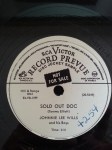
Murphy initially thought of the project as a simple essay, perhaps five or 10 pages. He wanted merely to get down everything he knew. But he kept digging deeper, talking to people who knew Brian Wilson and the other band members, and the project grew. Murphy didn’t interview Wilson himself.
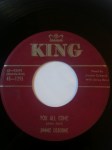
The book took him eight years to complete, largely because of his attention to detail. Murphy got his undergraduate degree in chemistry and brought to his writing a scientist’s fascination with research and verification.

He conducted 75 interviews with close friends and relatives of group members. The book includes everything from diagrams of the band’s first recording studio and copies of recording contracts to a list of its earliest public appearances — before anyone outside of Hawthorne, California knew who they were.

“That’s the scientific part of my mind,” he said. “I loved the detailed research.”

Murphy even tracked down Judy Bowles, who was once engaged to Brian Wilson, the creative genius of the band. Bowles was the inspiration for the song “Surfer Girl,” which became one of the group’s many hits. “She was sort of a coup,” Murphy said.

When Bowles and Wilson first dated, the group was known as the Pendletones, a variation on the name of the long-sleeved Pendleton wool shirts that California surfers were wearing at the time. The group was also briefly known as The Surfers, although that was ditched because another group had already taken the name. The executives at the band’s tiny independent record company came up with the name “Beach Boys.” The group didn’t find out about the change until a box of the new records arrived and everyone got a look at the label. Initially, they objected, but the name stuck. “Now it’s just a part of the lexicon,” Murphy said. “It’s just became so accepted.”

Eventually, their music would be accepted, too. Eventually, executives from Capitol Records heard one of their demos, signed the group, and released the two-sided hit “Surfin’ Safari/409” in the summer of 1962.Jim at piano

“And they’re off and running,” Murphy said.

Pop music fans know the rest of the story — the rise, the drop in popularity even as the music grew more sophisticated and interesting. Wilson had more than his share of problems along the way with drugs and other demons. The group has gone through all kinds of changes, too.

But it’s the origins of the band that Murphy finds so interesting. A couple of Southern California kids with little formal musical training, decide to form a band and try to make records — maybe to meet girls, make some money, become famous. And it happened.

“They’re the quintessential American garage band,” Murphy said. “They pursued a dream and made it work.” He could say the same thing about himself.

Treating people’s dogs and cats at the Capitol Hill Animal Clinic is a long way from where he started. Murphy actually changed careers mid-stream, leaving a job with the Postal Service at age 37 to pursue his dream of becoming a veterinarian.

When he went back to school, his wife Bernadette supported them both. She’s a Washington, D.C. paralegal. She also proved an invaluable asset when it came to editing the book as well, making corrections and suggestions. She’s a Beach Boys fan, too, although a much more casual one than her husband.

As for Murphy, he’s still yet to tire of the group. Listening to the “Beach Boys” conjures up memories of sun, fun, surf and romance.

And he’s not alone. “Every summer,” he said, “they become popular again.”

By John McNamara, contact the reporter: jmcnamara@capgaznews.com
July 21, 2015
Bowie Blade mast

Link to article: http://www.capitalgazette.com/bowie_bladenews/ph-ac-bb-veterinarian-author-0723-20150721-story.html

If you’re interested in purchasing the book, visit AmazonBarnes and Noble, and McFarland Books.